Toyota’s 2026 RAV4 Plug‑in Hybrid vs bZ: Canadian prices, range and charging explained
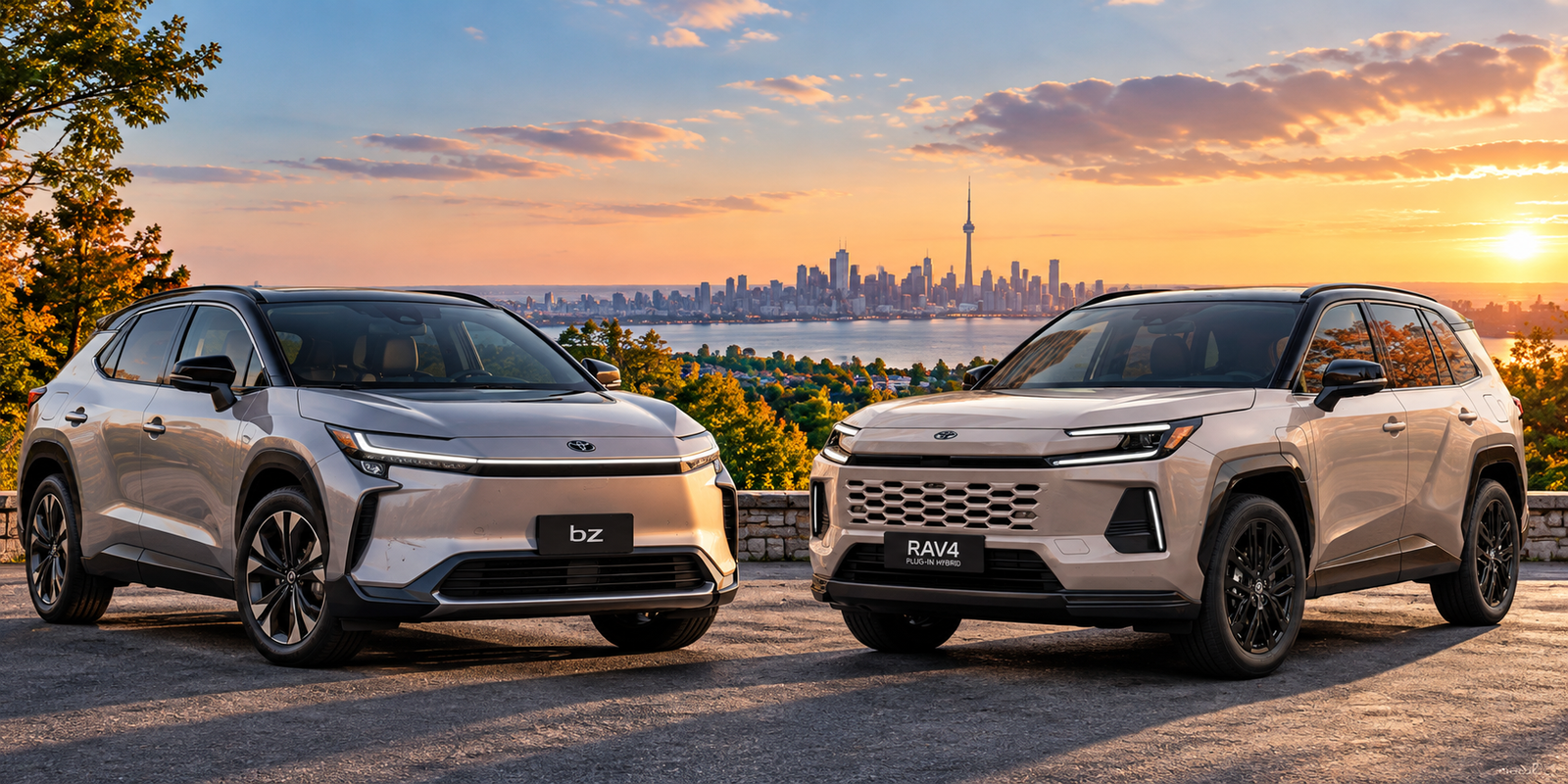
Toyota Canada now sells the 2026 bZ electric SUV and has announced Canadian pricing for the 2026 RAV4 Plug‑in Hybrid, putting two very different electrified crossovers squarely next to each other in showrooms and order guides. The choice for Canadian buyers comes down to architecture: a battery‑electric bZ with long all‑electric range, or a RAV4 that pairs a sizable traction battery with a gasoline backup for extended trips.
Both vehicles are priced within striking distance of each other in Canada. Toyota Canada lists the bZ XLE FWD starting at $45,990, the XLE AWD at $53,390 and the Limited AWD at $61,690. For the RAV4 Plug‑in Hybrid, Toyota Canada published a starting MSRP of $48,750 for the SE, with higher‑trim XSE and GR SPORT grades rising into the mid‑$50,000s and above.
Those price points reflect different delivery of electrification. The bZ is a full battery‑electric vehicle with two battery sizes for Canada: 57.7 kWh on the XLE FWD and 77 kWh on AWD grades. Toyota’s manufacturer‑estimated ranges for Canada vary by grade: approximately 380 km for the XLE FWD, about 468 km for the XLE AWD and roughly 436 km for the Limited AWD. Toyota also says the bZ adopts the NACS charging port, has an upgraded 11‑kW onboard AC charger and supports DC fast charging capable of roughly 10–80% in around 30 minutes under ideal conditions.
The RAV4 Plug‑in Hybrid takes a different approach. Toyota Canada lists a gross traction battery capacity of 22.7 kWh and a manufacturer‑estimated all‑electric driving range that the press release cites as 80 kilometres; Toyota’s online configurator shows grade‑dependent estimates in the mid‑80s to high‑80s kilometres (examples include figures around 85–89 km). The RAV4 PHEV’s system net output is quoted at 324 hp, and Toyota confirms some PHEV grades offer towing capability (Toyota’s materials list up to 3,500 lb for specified grades).
Charging hardware and connectors differ between the two models and between RAV4 PHEV grades. Toyota Canada’s material describes onboard‑charger and connector differences by grade—the SE, Tech and other packages are listed with different onboard charger ratings and connector types (for example, 7 kW on some grades and 11 kW on the Tech package; J1772 and CCS/DC fast‑charging capability are referenced). Because these are grade‑specific, Toyota’s published pages recommend confirming the exact charger and connector fitment per trim with dealers.
How they behave in real life is already being measured by third‑party testers in the U.S. Edmunds ran a head‑to‑head test and reported editorial observations: in their test the RAV4 PHEV’s electric‑only operation lasted longer than the EPA estimate (Edmunds measured about 62 miles before the engine engaged, versus an EPA value Edmunds cited of 49 miles) and recorded 0–60 mph times near 5.8 seconds for the RAV4 PHEV and about 4.6 seconds for the dual‑motor bZ AWD. Those are Edmunds’ U.S. test results and are useful context, but Toyota Canada’s published estimates and Canadian conditions (cold weather, charging network differences) may produce different real‑world outcomes.
What Canadian buyers should watch for
If you’re weighing these two Toyotas, several practical considerations matter and are already visible from Toyota Canada’s specifications:
- Daily driving pattern: the RAV4 PHEV’s roughly 80–89 km electric range (manufacturer estimates) could cover many commutes without the gasoline engine, while the bZ’s much larger battery delivers several hundred kilometres of all‑electric driving for longer trips without refuelling.
- Home and public charging: the bZ benefits strongly from Level‑2 home charging and broader DC fast‑charge availability for longer trips; the RAV4 PHEV’s smaller battery reduces dependence on fast charging and lets owners rely more on occasional Level‑1/overnight charging.
- Cold‑weather effects: manufacturer estimates are published for Canada but independent Canadian winter range and charging tests are needed to understand how either model performs in real Canadian winters.
- Trim‑specific gear: RAV4 PHEV charging hardware, towing capability and the presence of CCS/DC fast charging depend on grade; verify the exact equipment on the vehicle you plan to buy.
Toyota Canada’s press materials confirm the bZ is on sale at Canadian dealers and that pricing for the RAV4 Plug‑in Hybrid has been published and the model is headed to Toyota Canada dealers. For concrete dealer‑level availability, delivery timing, and grade‑by‑grade charger fitment, Toyota Canada and local dealers should be contacted—those items can vary by region and over time.
Finally, incentives and rebate eligibility often factor into the EV vs PHEV decision in Canada, but federal and provincial programs have program rules tied to MSRP and vehicle type that change over time. Buyers should check current federal and provincial incentive rules against the published Toyota MSRPs for the specific trim they intend to buy.
Speedhounds can produce a compact side‑by‑side spec table of confirmed Canada‑market numbers (MSRPs, battery sizes, manufacturer estimated ranges and key charger specs) sourced directly from Toyota Canada if readers would find that useful. For now, Toyota’s Canadian pricing and published technical figures give shoppers a clear baseline: the bZ aims to deliver pure‑EV range and fast‑charging convenience, while the RAV4 PHEV pairs hundreds of kilometres of gasoline backup, higher combined output and towing capability with an EV driving window that will cover many daily trips.