New Brunswick’s EV Charging Plan: What the Funding Covers
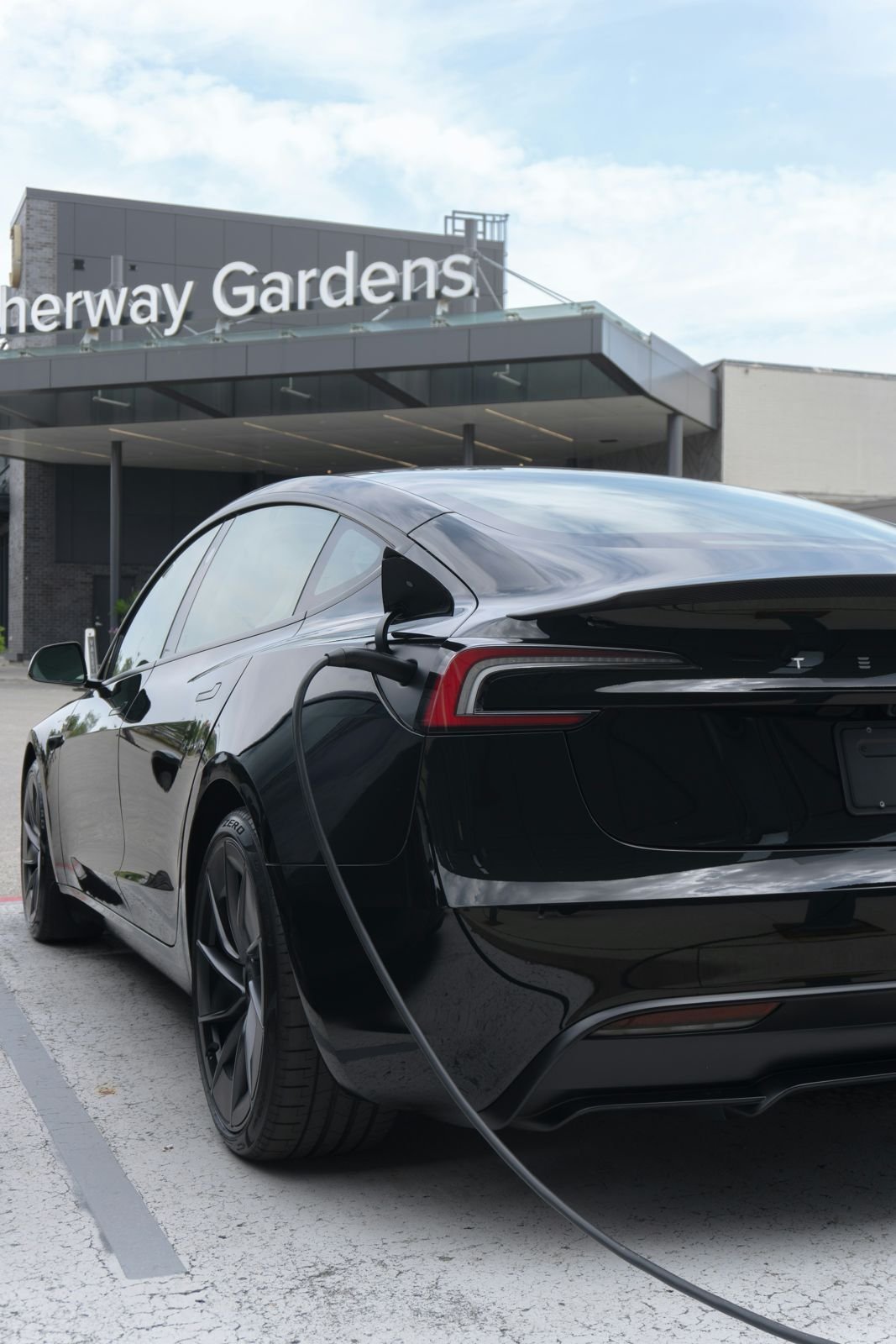
Representative archive photograph of EV charging in Etobicoke, Ontario, in 2024. Photo: Linxi Xie / Unsplash; Unsplash License. Resized for web. Not a photograph of a funded New Brunswick site or a BC policy event.
New Brunswick announced on Aug. 4, 2026 that it will invest targeted Climate Change Fund money to expand its electric‑vehicle charging capacity — including a $5.0‑million program to add 16 fast chargers (29 total ports) to the province’s eCharge public network.
The provincial news release says the Department of Energy will work with NB Power to install fast chargers in “underserved areas” and expand busy existing sites. The same announcement also earmarks $955,000 to grow government fleet charging capacity, including three regional hubs in Moncton, Saint John and Miramichi, and a separate $100,000 allocation for additional chargers at provincial parks (République, Mactaquac and Herring Cove). The funding is part of a wider nearly $64‑million Climate Change Fund package covering 72 projects in 2026‑27. The government release is the source for these figures.
What the announcement actually confirms
The public network, government fleet hubs and park installations serve different purposes. In particular, funding a government fleet hub does not establish that it will be open for public charging.
What remains unconfirmed (and why it matters to drivers)
The release does not list site locations, commissioning dates or technical specifications such as maximum kW output or connector types. It also doesn’t state whether the three government fleet hubs will be publicly accessible or reserved for government vehicles only. Those are operational details drivers and fleet planners need to plan trips or replacements, and they aren’t supplied in the announcement.
A funding announcement is not an installation or commissioning report. Drivers can use NRCan’s charging-station locator to find locations and filter station information. Before relying on a stop, check the operator’s current station information as well. A location appearing on a map does not guarantee that a particular port is working or unoccupied when you arrive.
For fleet managers, the $955,000 commitment signals the province is preparing to add centralized charging capability for government vehicles in three regions, but the release does not confirm whether those hubs will accept non‑government vehicles or how they will be operated and maintained.
What to check before relying on a new charging stop
Look for the individual site’s opening notice, public-access rules, connector compatibility and operating information. Treat the August announcement as the funding context for future expansion, rather than a substitute for those site-level details. Keeping an alternative charging stop in the route plan is also more useful than assuming that an announced project will be ready by a particular journey.
For background on which vehicles need external charging, our Canadian powertrain primer explains the differences between battery EVs, plug-in hybrids and other hybrids.