Leasing vs Financing a Car in Canada: What to Check Before You Sign
Leasing and financing both get you into a new vehicle, but they leave you in very different positions when the term ends. According to the Financial Consumer Agency of Canada, a lease is a set of regular payments for the use of a car over a fixed term, usually three to five years, while a car loan is money borrowed to buy the vehicle. This guide explains how each works, where the costs hide and what to check before you sign.
How a car loan works
With a loan, you borrow money to buy the vehicle and repay it with interest over a set number of months. You can arrange it through a dealership, which may work with a manufacturer’s finance arm, a bank, a credit union or an independent lender, or directly with your own financial institution. The agency notes that you may be able to negotiate a better interest rate with your own bank or credit union, especially if you have an account, a mortgage and a credit card in good standing, so it is worth asking for a quote before you visit a dealer.
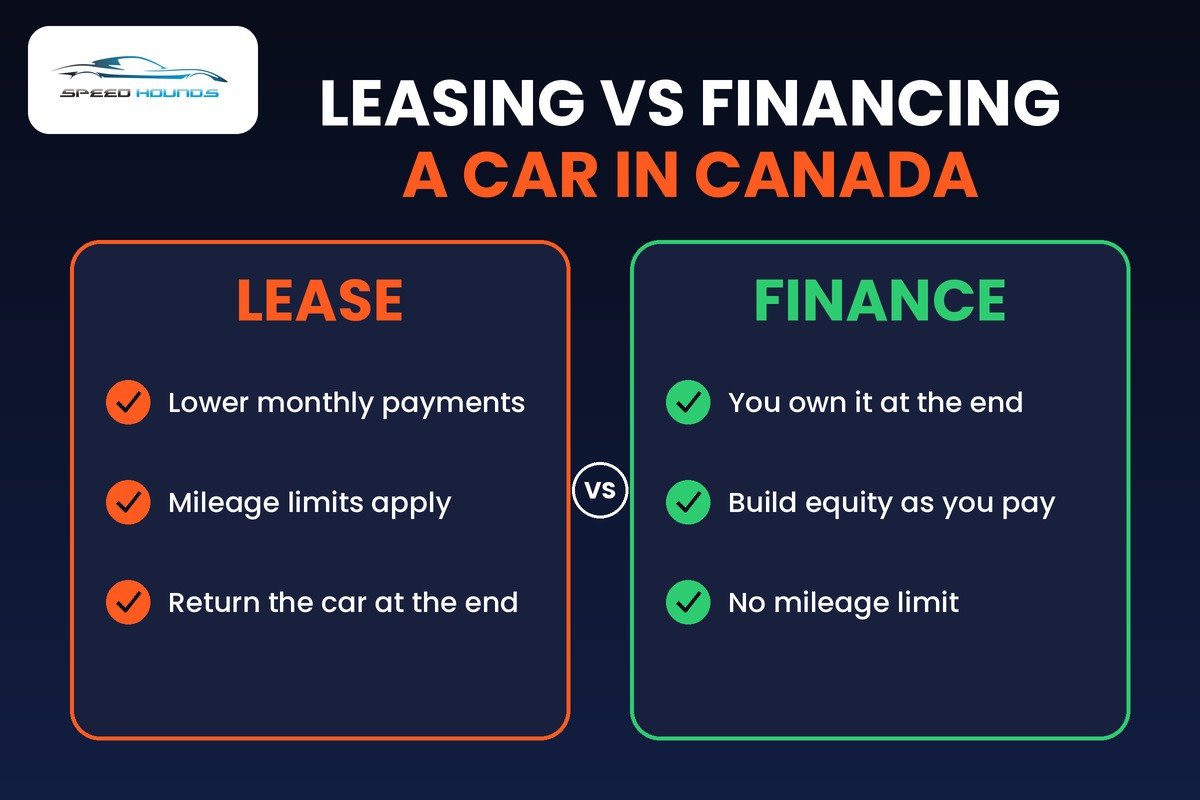
When the loan is repaid, the car is yours. There are no distance limits and no return inspection, but you carry the risk of depreciation. If the car loses value faster than you pay down the loan, you can owe more than the vehicle is worth, a situation the agency calls negative equity and covers in its guidance on the financial risks of buying a car.
How a lease works
A lease is typically arranged through a dealership, and payments usually go to a bank or credit union. The agency says lease payments are generally lower than loan payments over the same term, because you pay for the use of the car rather than for its full price. At the end of the term you can buy the car, return it or lease a new one.
The lower payment comes with conditions. Leases include restrictions, and the agency points to fees for excessive wear and tear. It also warns that breaking a lease early may be very costly. Leasing may suit people who like to change vehicles often, but only if they fully understand those conditions before signing.
Leasing and financing side by side
| Feature | Car loan | Car lease |
|---|---|---|
| Ownership | You own the car once the loan is repaid | You do not own it at the end, but may be able to buy it |
| Typical payments | Cover the full cost of the car plus interest | Generally lower than a loan with the same term |
| Term | Set by the loan agreement | Typically three to five years |
| Wear and tear | Affects resale value only | Excessive wear can be charged at lease end |
| Ending early | Sell the car and settle the loan | May be very costly |
| Arranged through | Dealer, bank, credit union or lender | Typically a dealership |
What to check before you sign a lease
Because a lease is a contract about conditions as much as price, the questions below matter as much as the monthly figure.
- Kilometre allowance: Find out how many kilometres a year are included and what each extra kilometre costs. In Quebec, the consumer protection office says a merchant can charge for excess kilometres only if the contract specifies the fee.
- Wear standards: Ask how the lessor defines normal wear and what counts as abnormal.
- Early termination: Ask how the early-exit charge is calculated before you need it.
- Buyout price: If you might keep the car, find out what it would cost to buy it at the end.
- Tires: Check what the contract says about replacing tires and about switching between winter and all-season sets.
A hypothetical example shows why the kilometre clause matters. If a contract allows 20,000 km a year over four years and you drive 25,000 km a year, you finish 20,000 km over the limit. At an illustrative fee of 15 cents a kilometre, that is a $3,000 bill at lease end. The numbers are invented, but the arithmetic is the same for any contract, so work it through with your real driving habits.
Lease returns in Quebec
Quebec’s Office de la protection du consommateur sets out rules for what a merchant can charge when a leased vehicle comes back. Merchants may charge for abnormal wear but not for normal wear. For contracts signed on or after April 5, 2024, the merchant must offer a free inspection at least 90 days before the lease ends. The inspection takes place 30 to 60 days before the end date, and the merchant must give you a written report right away.
After the car is returned, the merchant must give written notice of any abnormal wear, and you have 10 days to repair it or have it repaired. A merchant cannot charge for wear if it skipped the free inspection, the report or the notice, or if it re-leases or sells the vehicle before your 10-day deadline.
The office also says merchants cannot charge for a new set of tires to replace excessively worn ones, and that charging to swap winter tires for all-season or summer tires is allowed only if the contract provides for it. They also cannot charge because a routine maintenance part is not from the original manufacturer, unless the contract clearly specifies the required part. If you dispute the fees, you can negotiate, refuse to pay and make the merchant prove its claim in court, or pay under protest and recover the money in Small Claims Court. This is general information, not legal advice, and rules in other provinces differ, so read your own contract and your provincial consumer protection agency’s guidance.
Which option suits which driver
A lease tends to fit drivers who want a newer vehicle every few years, drive a predictable distance and are comfortable returning the car in good condition. A loan tends to fit drivers who keep vehicles for a long time, drive more than a typical lease allows or want the freedom to modify, sell or trade the car whenever they choose.
The agency offers an online comparison tool, the Vehicle Lease or Loan Calculator, that lets you compare the cost of leasing a vehicle with borrowing to buy one. Run both scenarios with real quotes, and compare the total you will have paid at the end of the term, not only the monthly payment.