Car Insurance in Canada: What Sets Your Rate and How to Lower It
Your car insurance premium is not a single price from a single formula. The Insurance Bureau of Canada and Ontario’s financial regulator, FSRAO, both explain that insurers build a profile of each driver and vehicle, then price the risk. Knowing which parts of that profile you can change is the fastest way to a lower bill. Auto insurance is mandatory across Canada, and the required coverage is set by each province and territory.
What goes into your premium
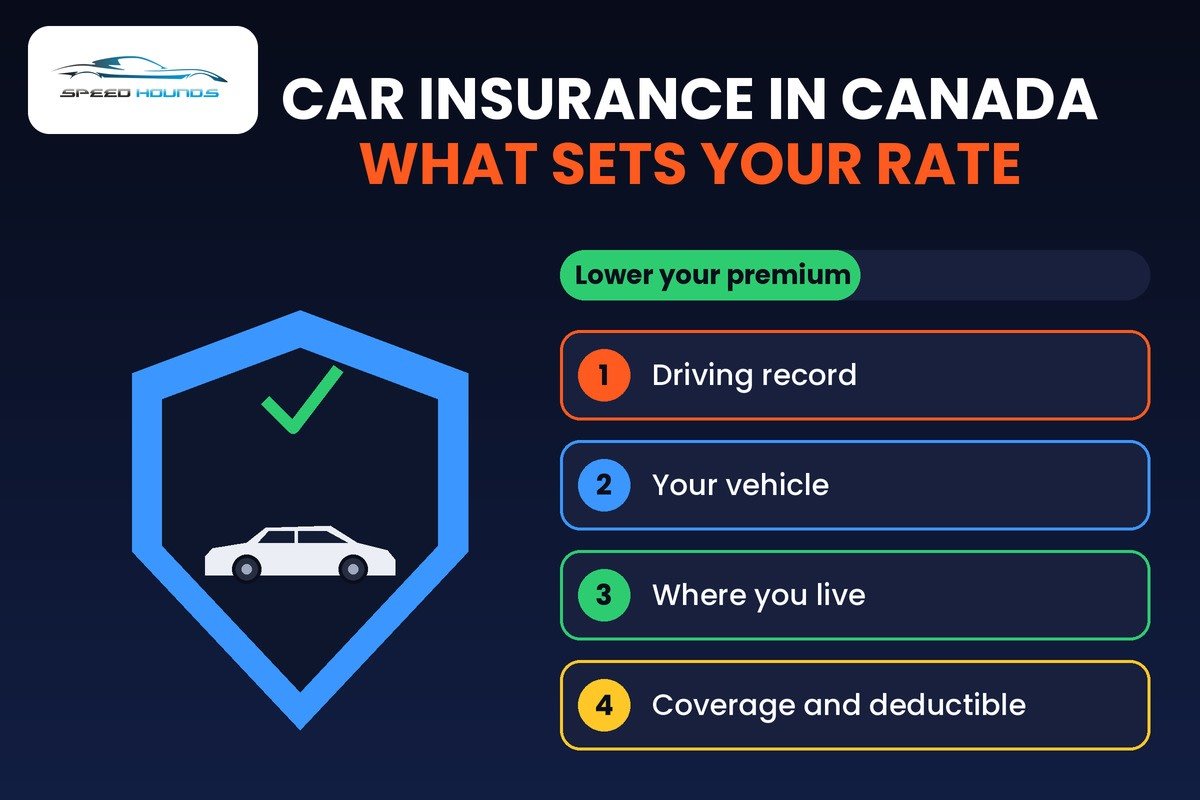
FSRAO says rates vary from person to person and from vehicle to vehicle. The main inputs are below.
| Factor | How it affects your rate |
|---|---|
| Driving record | Past accidents, years licensed, driver training, speeding tickets and convictions all count. A better record means a lower premium. |
| Location | Rates are usually higher in urban areas, where collisions and vehicle theft are more frequent. |
| Age and demographics | Older drivers have fewer accidents than younger ones, especially teenagers. Premiums usually drop after age 25. Gender and marital status also influence the risk profile. |
| Kilometres driven | The more you drive each year, the higher the premium. Commuting to work or school also matters. |
| Coverage chosen | Collision or upset and comprehensive coverage raise the price. More protection costs more. |
| Deductible | A lower deductible means a higher premium. |
| Your vehicle | Make, model and year affect rates, which is why IBC suggests comparing premiums before you buy. |
Why two insurers quote different prices
Insurers group similar drivers into pools and set premiums from the claims they expect that group to produce. A company’s own claims experience with a group can push its price above or below a competitor’s for the same driver. That is why IBC puts shopping around at the top of its list of money-saving steps.
Ten ways to lower the bill
IBC lists ten steps. The first three deliver the most for many drivers, though results depend on your insurer and province.
- Shop around and compare prices, which IBC calls the simplest way to save.
- Raise your deductible. A higher deductible lowers the premium, but you pay more out of pocket at claim time.
- Drive less. Carpooling or taking transit once a week reduces annual kilometres.
- Drop collision coverage on an older vehicle. Legal liability coverage still applies, so damage you cause to others remains covered.
- Drive safely and keep your record clean.
- Install a theft-deterrent system and ask your insurer about a discount.
- Ask about usage-based insurance, also called telematics.
- Compare insurance costs for different vehicles before you buy.
- Ask about discounts and bundling, such as combining car and home policies.
- Talk to your insurance representative about options, limits and loyalty programs.
Deductibles: the trade-off
Insurers can set separate deductibles for different coverages, including collision or upset, comprehensive, all perils and direct compensation property damage. Raising one lowers the premium, but make sure you could cover that amount if you had to make a claim tomorrow. A lower premium is no bargain if the deductible would strain your budget.
Is telematics worth it?
Usage-based insurance uses an app or a plug-in device to track how you drive and may personalize your premium to reward safe habits. IBC advises asking whether your insurer offers it. Before enrolling, ask what data is collected, how it is used and whether it can change your rate at renewal, so you know what you are agreeing to.
How to compare quotes properly
A cheaper quote is only better if it covers the same things. When comparing, line up each insurer’s deductibles for every coverage, the policy limits, any loyalty or multi-policy programs, and whether telematics is available. Ask about every discount you might qualify for, since insurers do not always apply them automatically.
Older cars and dropping coverage
Collision and comprehensive coverage pay to repair or replace your own vehicle. On an older car with a low market value, the premium for those coverages may add up to more than a payout would be worth. FSRAO says dropping them lowers rates. The mandatory liability coverage stays in place regardless. If you have a car loan or lease, check your contract before dropping any coverage. Your lender is usually named on the policy and is paid first if the car is lost or damaged.
Where to get help
IBC runs a Consumer Information Centre at 1-844-227-5422 for questions about auto insurance. FSRAO advises discussing your options with your insurer, agent or broker, and rules and consumer protections differ by province, so confirm what applies where you live.