Tesla’s Flying Roadster Is Spectacular. But Is It Still a Car? Gimmick?
Tesla’s new Roadster can reportedly hit 60 mph in 0.81 seconds, flip through the air and even drive upside down. Elon Musk has delivered a spectacle. Now comes the harder question: What is any of this actually good for?
Nine years after Tesla first teased its second-generation Roadster, Elon Musk has finally delivered something extraordinary.
A car that can jump over other cars.
A car that can flip through the air.
A car that can seemingly defy the limitations of conventional automotive engineering.
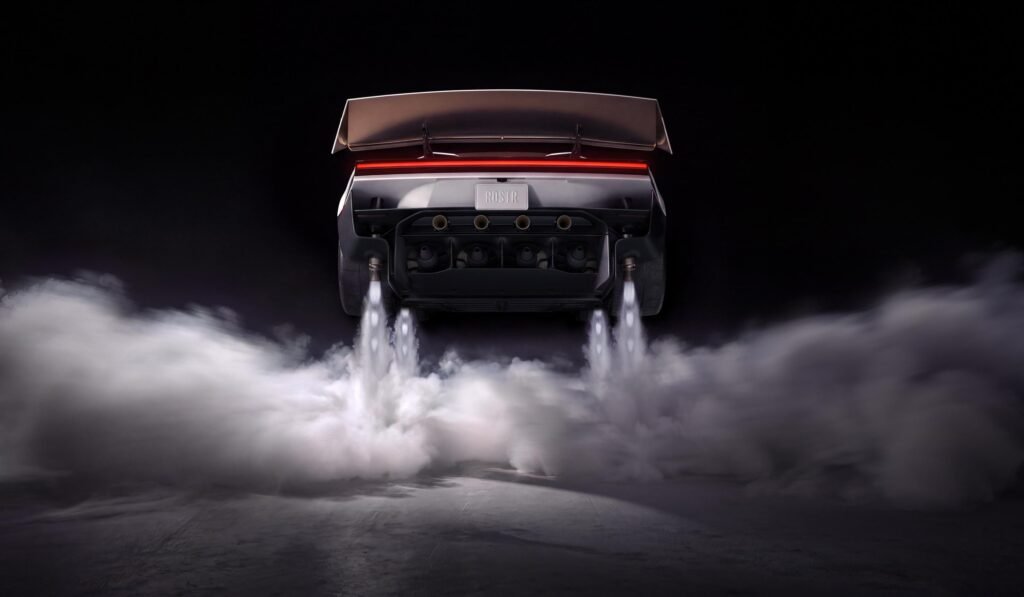
At Tesla’s October 15 reveal at SpaceX’s McGregor, Texas, facility, the new Roadster performed aerial manoeuvres using compressed-air thrusters, drove upside down with the assistance of a fan-based suction system and recorded a claimed 0–60 mph acceleration time of just 0.81 seconds.
It was astonishing to watch.
But once the applause fades and the smoke clears, several questions remain.
Is this the future of the automobile, or have we just witnessed one of the most elaborate automotive publicity stunts ever created?
At Speedhounds, we believe extraordinary engineering deserves recognition. But extraordinary claims also deserve extraordinary scrutiny.
First, Is This Even a Roadster?
Traditionally, a roadster is an open-top, two-seat sports car designed around driving enjoyment, agility and a direct connection between driver, machine and road.
Tesla’s original Roadster followed that philosophy reasonably closely. Its new creation, however, is something entirely different.
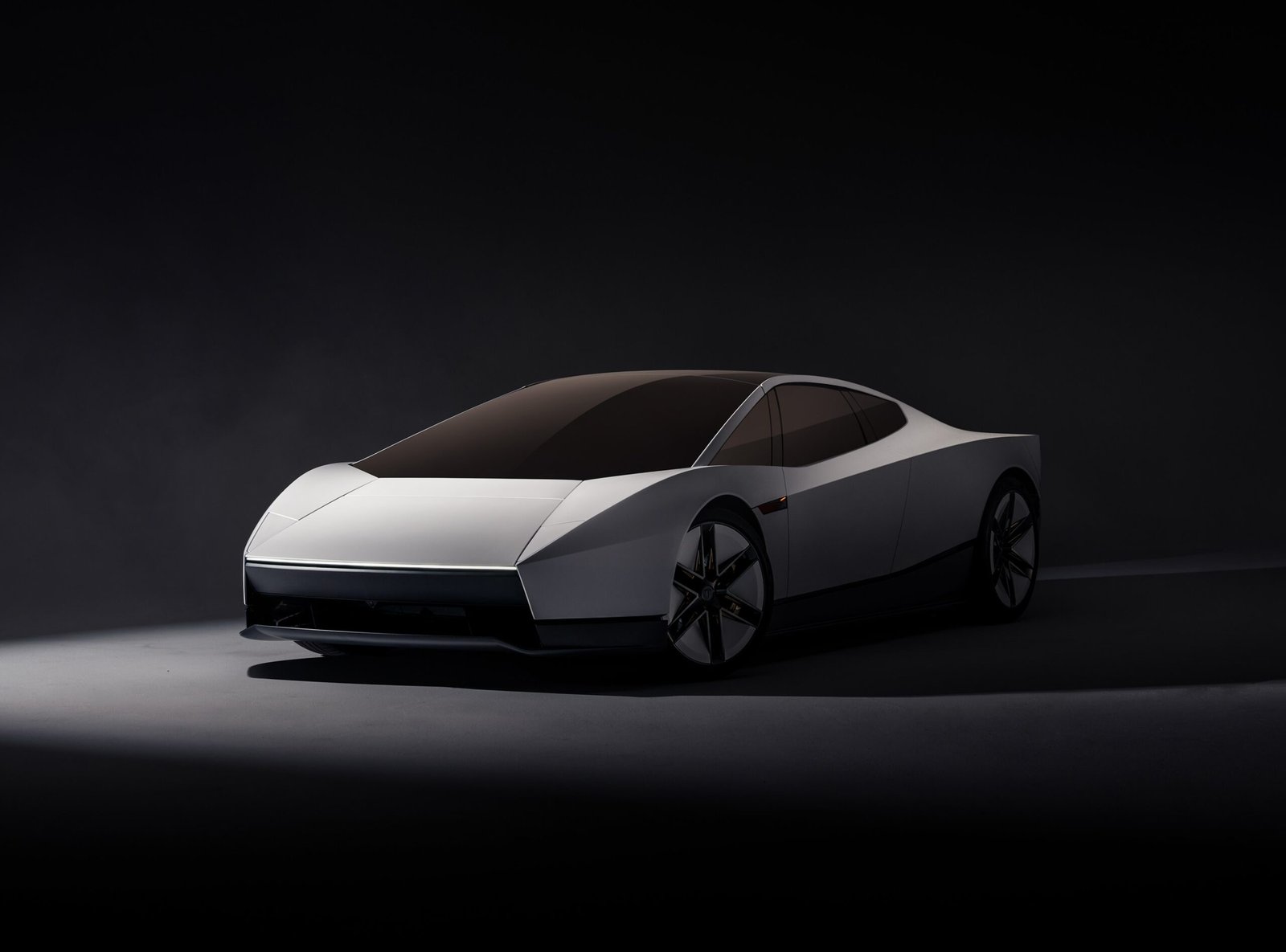
The redesigned vehicle is a futuristic, wedge-shaped electric supercar featuring rocket-inspired thrusters and technology capable of launching it into the air.
It may carry the Roadster badge, but the version demonstrated has far more in common with an experimental engineering prototype than a conventional open-top sports car.
To be fair, automotive terminology has evolved. Not every vehicle marketed as a roadster strictly follows the traditional definition.
But there is a deeper question here.
If a sports car’s defining feature is its ability to leave the road, is Roadster really the right name?
Perhaps Tesla has created a new category.
Or perhaps the familiar badge is simply more marketable.
The Flying Technology Is Real. But Let’s Define Flying.
One of the most important distinctions missing from much of the excitement is the difference between sustained flight and a brief, powered aerial manoeuvre.
Tesla demonstrated a system using high-pressure compressed air directed through multiple thrusters.
These thrusters can generate forces independent of the vehicle’s tyres, helping accelerate the car and control its movement when airborne.
That is a legitimate engineering concept.
It is also fundamentally different from a car that can take off, travel through the sky and land at another destination.
The Roadster’s demonstration involved carefully controlled jumps, flips and landings. It did not establish sustained, practical flight.
There was no publicly demonstrated point-to-point journey through the air, no evidence of routine operation over public roads and no independently verified assessment of how the system performs under changing weather or traffic conditions.
A car that can jump is not necessarily a flying car.
That distinction matters.
What Happens Outside a Perfectly Controlled Test Environment?
Tesla’s demonstration took place in a controlled setting, with carefully planned manoeuvres and a dedicated test area.
That is an appropriate environment for experimental technology.
But real roads are not test facilities.
Imagine attempting a similar manoeuvre on a Canadian road in January.
What happens when the surface is covered in snow, slush or salt?
How does the system perform when road debris interferes with the underbody suction mechanism?
What happens when a thruster malfunctions, or the vehicle lands on an uneven surface?
And perhaps most importantly, what happens when another vehicle, cyclist or pedestrian enters the intended landing area?
These are not hypothetical concerns invented to dismiss Tesla.
They are precisely the questions engineers, safety regulators and insurers would need to investigate before any airborne vehicle could be considered suitable for ordinary public use.
The Roadster’s controlled demonstration proves that Tesla has achieved impressive prototype capabilities.
It does not prove that those capabilities are safe or repeatable in everyday driving.
0–60 MPH in 0.81 Seconds: Impressive, But Useful?
Let’s acknowledge the achievement.
Accelerating from 0 to 60 mph in 0.81 seconds is an extraordinary claimed performance figure.
That is approximately 97 km/h in less than one second.
If independently verified under standardized conditions, it would represent a remarkable acceleration achievement.
But there is a catch.
Tesla’s compressed-air thrusters provide additional propulsion beyond what the tyres can transmit to the road.
That means the result is not directly comparable with the acceleration performance of a conventional tyre-driven sports car.
And there is another question worth asking.
How many drivers could realistically exploit that performance?
Such acceleration produces immense physical forces, requires carefully controlled conditions and would be inappropriate for ordinary public-road use.
A spectacular acceleration number is not automatically evidence of a better driving experience.
A great sports car is about far more than how quickly it reaches 60 mph. Steering feedback, braking consistency, chassis balance, thermal management, repeatability and driver confidence matter too.
Tesla has shown us a headline-grabbing number.
We are still waiting to see how the Roadster performs as an actual sports car.
The Most Interesting Technology Might Not Be the Flying Part
Ironically, Tesla’s most meaningful engineering innovation could be the part receiving less attention.
The Roadster’s fan-assisted suction system allows the vehicle to generate substantial downforce without depending entirely on conventional aerodynamic airflow.
That principle has genuine motorsport relevance.
Vehicles such as the McMurtry Spéirling have already demonstrated how fan-generated downforce can deliver exceptional grip, including at very low speeds.
Applied intelligently, similar technology could improve cornering performance and traction on a circuit.
Unlike aerial flips, this has a clearer connection to automotive performance.
Of course, translating an extreme track-oriented system into a durable, road-legal production vehicle would introduce challenges involving debris, noise, energy consumption, maintenance and safety.
But this is the technology we would most like to see Tesla develop and validate.
Because making a car grip the road better may be more useful than making it leave the road altogether.
Can You Actually Register a Flying Roadster in Canada?
This is where the conversation becomes particularly relevant for Canadian buyers.
Vehicles intended for Canadian roads must meet applicable safety requirements, including the Canadian Motor Vehicle Safety Standards.
A conventional imported sports car already faces regulatory and compliance requirements.
A vehicle equipped with high-pressure thrusters capable of producing sudden propulsion or lifting it into the air introduces additional questions.
How would authorities assess the risks posed to nearby vehicles and pedestrians?
What safeguards would prevent accidental activation?
How would insurers classify a vehicle capable of intentional airborne manoeuvres?
Would a separate operating framework be necessary if the vehicle were intended to function as an aircraft?
Canadian aviation regulations, administered through Transport Canada, are not automatically satisfied simply because a machine is also an automobile.
And road registration would not, by itself, authorize flight.
Tesla’s own descriptions make an important distinction: the extreme Rocket configuration demonstrated with aerial capabilities is not approved for public road use.
That should be front and centre in any discussion about the so-called flying Roadster.
At present, there is no publicly established basis for concluding that Canadian buyers could register and legally operate that configuration on public roads.
What About the Practicality Nobody Is Discussing?
Compressed-air propulsion raises another set of questions.
How frequently must the pressure tanks be replenished?
How much energy does the onboard compression system consume?
What are the inspection requirements for high-pressure storage systems?
How much weight and packaging space do the tanks, valves, nozzles and associated hardware add?
What happens after repeated launches or aggressive acceleration runs?
And how expensive would all this technology be to repair?
Tesla says the vehicle can replenish its compressed-air supply onboard. But without comprehensive independently verified specifications, its operational efficiency, recharge time and real-world durability remain uncertain.
A prototype can be engineered to perform an extraordinary stunt.
A production vehicle must perform reliably over years of ownership.
Those are very different challenges.
Nine Years of Waiting. Another Two Years to Go.
The second-generation Tesla Roadster was originally unveiled in 2017.
The latest production target is now 2028.
That means more than a decade could pass between the original unveiling and actual customer deliveries.
Tesla deserves credit for continuing to push engineering boundaries, but repeated delays should not be ignored simply because the latest presentation was spectacular.
There are still important unanswered questions surrounding production specifications, independent performance testing, pricing, regulatory approvals and customer delivery timelines.
Until those details are established, this remains a compelling prototype rather than a proven production automobile.
Is Elon Musk Selling a Car or Selling a Moment?
This may be the most interesting question of all.
Consider what Tesla accomplished in less than half an hour.
It created an automotive spectacle capable of dominating headlines, generating millions of potential social media impressions and placing the Roadster back at the centre of the global conversation.
And it did so without delivering a production-ready vehicle to customers.
From a publicity perspective, the strategy is undeniably powerful.
But calling the reveal a publicity stunt does not mean the engineering is fake.
Both things can be true.
Tesla’s engineers may have achieved something genuinely remarkable, while the presentation itself was deliberately designed to maximize attention.
The challenge is separating the engineering breakthrough from the marketing spectacle.
Speedhounds Verdict: Incredible Engineering. Unanswered Questions.
We are impressed by the technology.
We are not yet convinced by its practicality.
The new Tesla Roadster demonstrates how far engineers can push the boundaries of automotive performance when conventional constraints are removed.
But a road-going sports car must ultimately be judged on more than dramatic demonstrations.
It must be safe, usable, serviceable, legally compliant and capable of delivering its promised performance outside a carefully staged environment.
Until Tesla demonstrates those qualities, calling the Roadster a practical flying car is premature.
Elon Musk has proved that he can make a car fly briefly. He has not yet proved why a road car needs to.
And that is the question we believe deserves far more attention than another acceleration record.
What do you think? Is the flying Roadster the future of performance cars, or a brilliant piece of automotive theatre?
Share your opinion with Speedhounds.
Editorial note: This analysis is based on Tesla’s October 15, 2026 reveal and publicly available reporting as of October 16. Performance figures are manufacturer-demonstrated or claimed unless independently verified. No independent road test was conducted by Speedhounds.