How Canadians Afford $80,000 Pickups: The 7-Year Loan Math
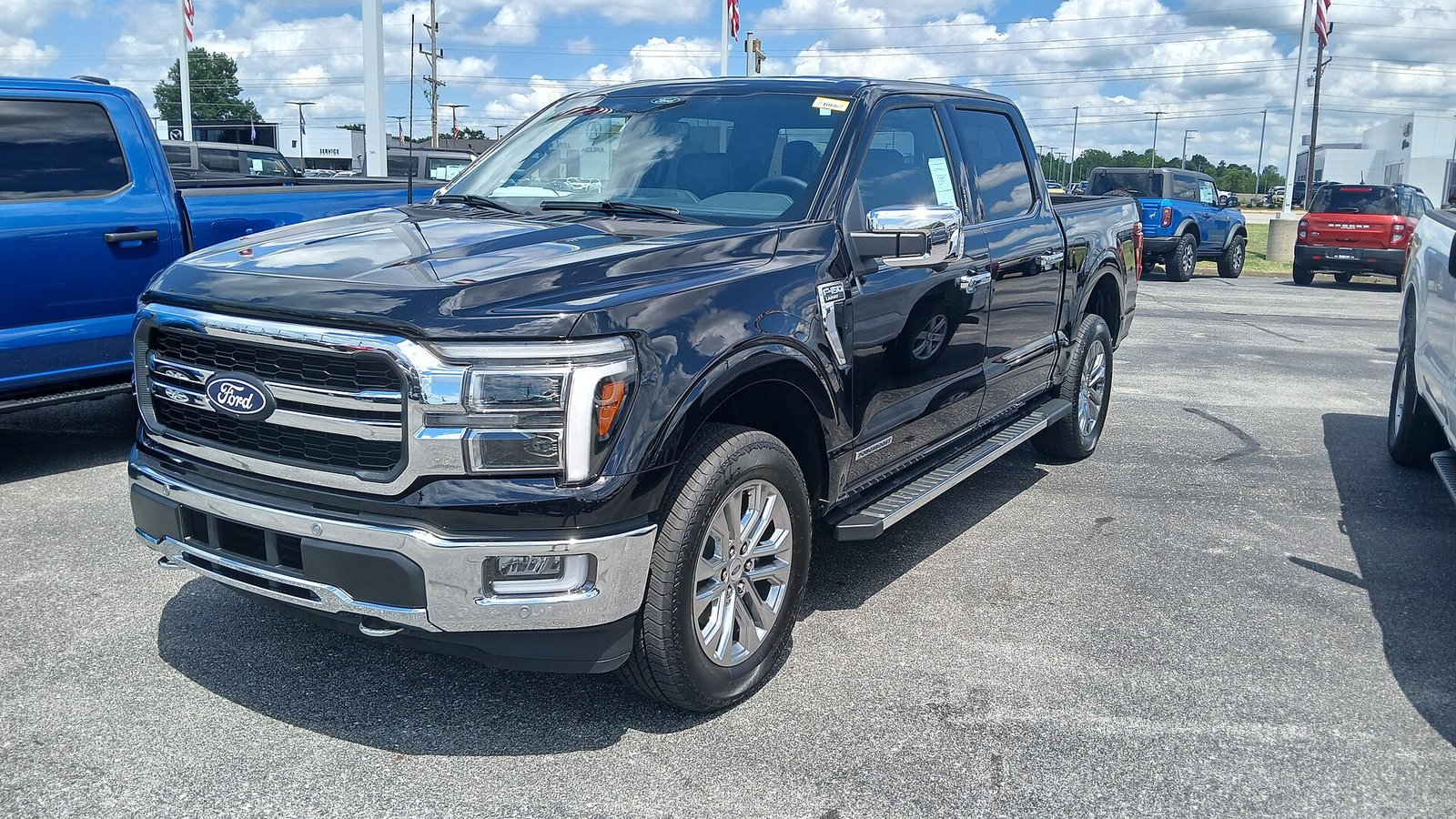
The Ford F-Series was Canada’s best-selling vehicle for the 16th year in a row in 2025, with 138,470 sold, according to Ford Canada’s 2025 sales results. A well-equipped F-150 now costs close to $80,000 before tax, while half of Canadian families take home about $9,000 a month or less. The gap between those two numbers is closed mostly by one thing: the length of the loan.
Last updated November 2026
Watch the full breakdown in our video, or read the numbers below.
What a 2026 F-150 costs in Canada
These are Ford Canada’s starting prices for the 2026 F-150, before freight, dealer fees and tax. For comparison, the AutoTrader Price Index put the average new vehicle in Canada at $62,176 in the third quarter of 2026.
| 2026 F-150 trim | Starting price |
|---|---|
| XL | $47,735 |
| STX | $51,830 |
| XLT | $55,340 |
| Tremor | $76,425 |
| Lariat | $76,690 |
| King Ranch | $92,885 |
| Platinum | $99,935 |
| Raptor | $113,420 |
Freight and fees add to every one of these figures. Our guide to what you actually pay for a new car in Canada explains how MSRP, freight and PDI fit together.
What Canadian households earn
Statistics Canada’s latest income figures are for 2024. The median after-tax income of Canadian families was $108,900, or about $9,075 a month. Counting every household, including people who live alone, the median was $75,500, or about $6,300 a month. Median means half of households earn more and half earn less.
One truck, one loan
Take the F-150 Lariat at its starting price of $76,690. With 13 per cent HST, as in Ontario, the amount to finance is $86,660 with nothing down. We left freight and dealer fees out to keep the example simple, so real figures are higher. The rate is 5.99 per cent, which a Canadian Ford dealer was advertising for 84 months on new F-150s in November 2026. We used the same rate for every term so the comparison is fair.
| Loan term | Monthly payment | Every two weeks | Total interest | Total paid |
|---|---|---|---|---|
| 5 years (60 months) | $1,675 | $773 | $13,839 | $100,499 |
| 7 years (84 months) | $1,266 | $584 | $19,647 | $106,307 |
| 8 years (96 months) | $1,138 | $525 | $22,628 | $109,288 |
At five years, the payment is about 18 per cent of a median family’s take-home pay for one vehicle, before fuel and insurance. Few buyers sign that. Stretching the loan to seven years cuts the payment by $409 a month, and quoting it every two weeks turns $1,266 a month into about $584. The truck and the price have not changed. Only the time has.
The longer loan is not free. Seven years costs about $5,800 more in interest than five, and the $76,690 truck ends up costing $106,307 before fuel, insurance or maintenance. A biweekly quote also hides a small detail: 26 biweekly payments a year add up to more than 12 monthly ones if the monthly figure was simply cut in half, so check which method the dealer used.
How common long loans are
This is the normal way to buy in Canada. J.D. Power’s Canadian data, as reported by RATESDOTCA, shows 54.7 per cent of new-vehicle loans run 84 months or longer. The same data put the average new-vehicle loan payment at $806 a month in March 2026, with 18.4 per cent of finance customers paying more than $1,000 a month. Our comparison of leasing and financing in Canada covers the other route: J.D. Power has reported that about a quarter of new vehicles are leased.
The negative equity trap
Canadian Black Book says most vehicles lose 15 to 25 per cent of their value in the first year, as reported by Money.ca. After 12 payments on the seven-year Lariat loan, the owner still owes about $76,400. That is almost the original sticker price, because the first year mostly paid off the tax and the interest.
| After one year | Amount |
|---|---|
| Still owed on the 84-month loan | About $76,400 |
| Truck’s value after 15% depreciation | About $65,200 |
| Truck’s value after 25% depreciation | About $57,500 |
| Owed above the truck’s value | About $11,000 to $19,000 |
Owing more than the vehicle is worth is called negative equity. It only becomes a problem if the truck has to be sold or traded early, after a job loss, a move or an accident. Selling the truck does not clear the loan, and at trade-in the unpaid balance is usually added to the next loan. J.D. Power reported in December 2024 that just over 20 per cent of trade-ins in Canada carried negative equity. In our example, rolling $8,000 of old debt into the same Lariat loan lifts the payment from $1,266 to $1,382 a month.
Who is really affording these trucks
- Buyers who can afford it. High-income households, and people in trades, farming and resource work where the truck is a tool.
- Businesses. A truck used for work is often bought or leased through a company, where the cost is treated differently from a family purchase. Ask an accountant what applies before signing.
- Leasing customers. A lease lowers the payment by paying for only part of the truck’s life.
- Everyone else, through time. Seven and eight year loans, biweekly quotes and old debt carried forward make the payment fit the budget.
Five checks before you sign
- Read three numbers first. In Ontario, OMVIC says the finance disclosure must show the cost of borrowing, the annual percentage rate (APR) and the total amount payable. Ask for the same three wherever you live.
- Compare 60 and 84 months on the same truck. On the Lariat the longer loan costs about $5,800 more in interest.
- Convert biweekly to monthly. Multiply by 26, then divide by 12.
- Split the trade-in into two numbers. What the dealer is paying for it, and what you still owe on it. If you owe more, ask where the difference is going.
- Price the trim below. The XLT in this example works out to $913 a month over seven years, $352 less than the Lariat every month.
We ran the same exercise on a compact SUV in what a $40,000 car really costs over five years in Canada, including insurance, fuel and depreciation. The figures here are an illustration, not financial advice: rates, prices and taxes vary by buyer and province.
Photo: Deathpallie325, CC BY 4.0, via Wikimedia Commons. A 2024 F-150 Lariat is shown.