BYD Confirms Flash Charging Plans for Canada
BYD executive vice-president Stella Li says the company’s Flash Charging network is coming to Canada, according to Auto123, which reported her comments on November 12. Li pointed to cold-weather charging as a priority for Canadian drivers. The remarks came without a construction schedule, a list of sites or a Canadian vehicle lineup, so the network is a stated plan rather than a launch.
What BYD says Flash Charging can do
The speeds below are BYD’s own figures, not results from Canadian testing. They apply to vehicles with the company’s second-generation Blade Battery.
| Condition | Charge window | Time (BYD figure) |
|---|---|---|
| Normal temperatures | 10 to 70 per cent | 5 minutes |
| Normal temperatures | 10 to 97 per cent | 9 minutes |
| -30 °C | 20 to 97 per cent | 12 minutes |
The cold-weather figure is the one that matters most in Canada, where winter slows charging and trims range in most electric vehicles. A claimed 12-minute stop at -30 °C would be a large improvement on what drivers see today, but it remains a manufacturer claim until the chargers are running here.
Power output and equipment
A single vehicle can draw up to 1,500 kW. When two vehicles charge at the same time, each is limited to 1,000 kW. Auto123 notes that the top figure is more than four times the 350 kW offered by the fastest public chargers now in Canada.
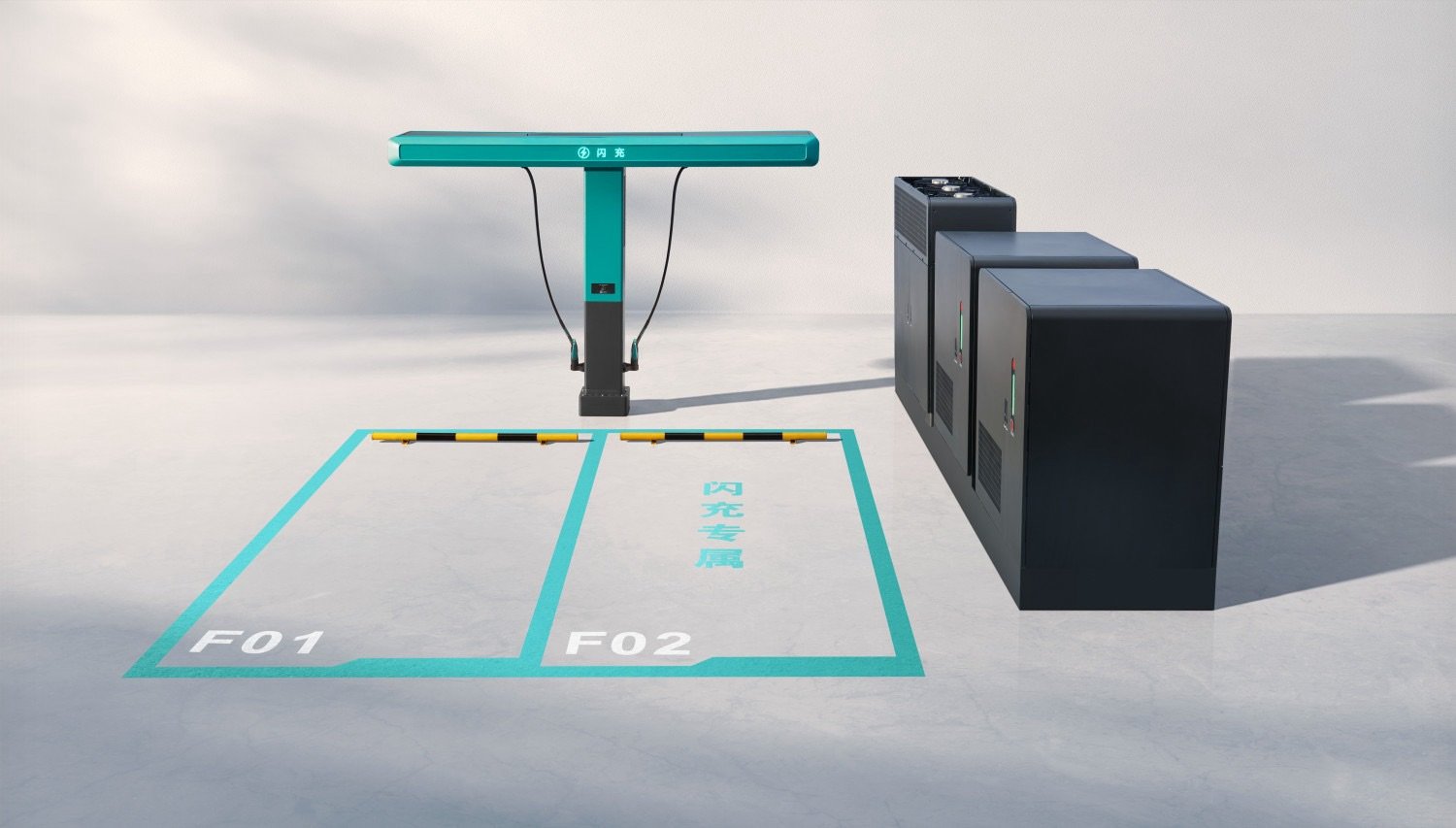
Each T-shaped unit has two CCS connectors, and Auto123 reports they can serve other brands’ electric vehicles. Vehicles must still be able to accept the power: the full speeds are reserved for models with the second-generation Blade Battery.
The stations are built around on-site storage. Each charger has two 185 kWh batteries, a 370 kWh buffer, and draws between 100 and 560 kW from the grid. The batteries discharge quickly into the vehicle, which lets a site deliver far more power than its grid connection supplies. For Canadian utilities and site hosts, that design lowers the size of the electrical service needed, though costs and permitting will vary by location.
Where the network stands elsewhere
Flash Charging stations already operate in Italy, Germany, France and the United Kingdom. BYD is aiming for 6,000 stations worldwide by the end of 2027. In Europe, only the Denza Z9 GT can use the full capability of the system, and a BYD demonstration charged that car from 10 to 80 per cent in 6 minutes 32 seconds.
BYD also showed an off-grid version in the Abu Dhabi desert, using solar panels, batteries and a robotic arm for automated plugging in. Nothing indicates that version is planned for Canada.
What it means for Canadian EV owners
BYD has said it plans to sell passenger vehicles in Canada, but a launch schedule and model lineup are still to be announced. That matters because the fastest charging depends on the car as well as the charger. Drive Tesla Canada also reported an earlier Toronto job posting for a Flash Charging business development manager, a hint that groundwork is under way, though the posting is not an official statement of network plans.
The policy backdrop is changing quickly. Under the Canada-China agreement, Chinese-built electric vehicles can enter at a 6.1 per cent tariff within a 49,000-vehicle annual quota. BYD is one of several Chinese brands preparing for the Canadian market.
For now, owners of today’s electric vehicles should not expect a 1,500 kW experience. Most cars on Canadian roads cannot take anything close to that power. The practical questions to watch are where the first sites open, what BYD charges per kilowatt-hour, whether non-BYD vehicles get access, and how the system performs in real Canadian winters.