
How to Get Your Car Ready for a Canadian Winter
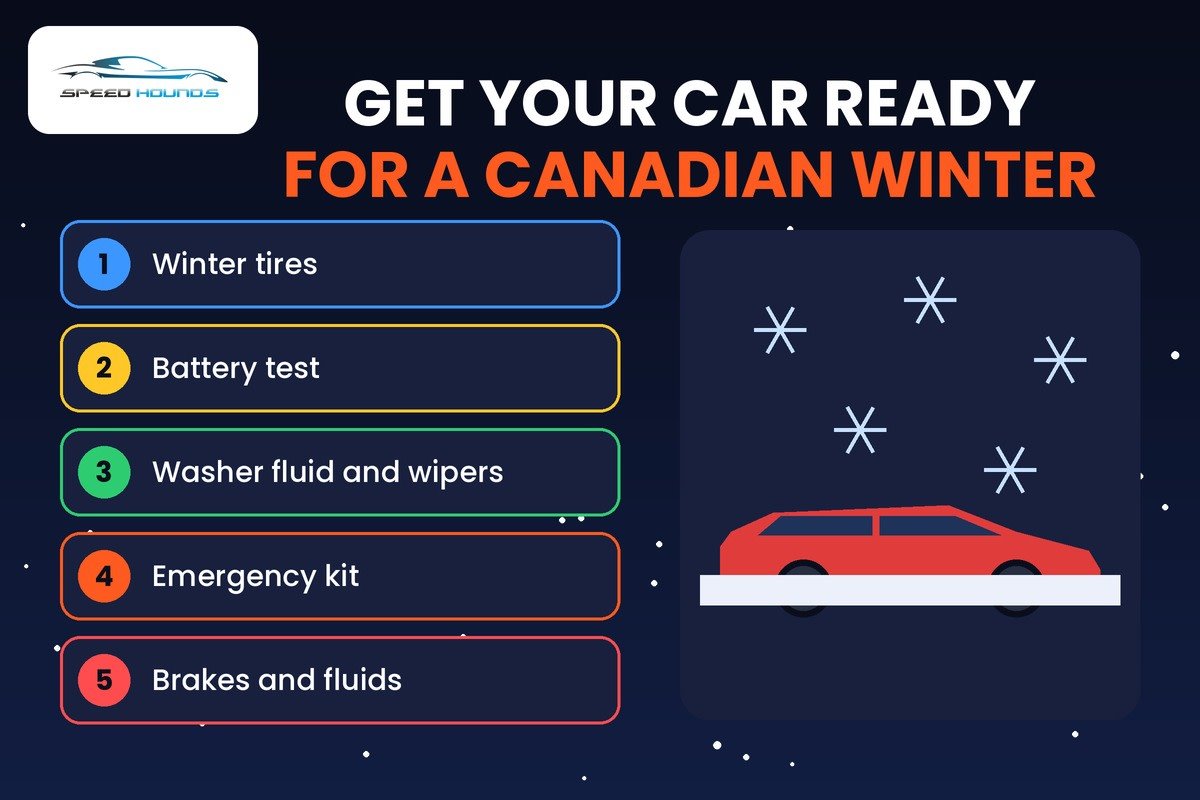
Cold weather puts extra strain on batteries, tires, fluids and wipers, and the checks that matter most can be done in an afternoon, according to CAA’s winter car care guidance. This guide turns that advice, along with Transport Canada’s winter driving emergency kit list, into a checklist you can work through before the first deep freeze.
Start with the battery
A battery has to work harder in the cold, so a weak one often shows itself on the first very cold morning. CAA notes that batteries three to five years old may fail, so age is the first thing to check. Look for corrosion around the terminals, any wetness on the case and bulges in the casing. Any of those is a reason to have the battery tested before temperatures drop, and replacing a weak battery on your schedule is far less disruptive than being stranded in a parking lot.
Slow, labouring starts are the usual warning sign. If the engine cranks more slowly than it did in the fall, do not wait for the first cold snap to confirm the problem.
Check the fluids
Three fluids matter most before winter: engine oil, coolant and washer fluid.
- Engine oil: CAA suggests an oil change before winter if about six months have passed since the last one.
- Coolant: The coolant needs to suit the cold in your area. If it has been more than two years since the system was flushed, replace it.
- Washer fluid: Keep the reservoir full and carry a spare jug in the trunk. Choose fluid rated to -40°C so it does not freeze on the windshield.
Road salt and slush use washer fluid quickly, so a spare jug is not an extravagance. Running out on a highway in a storm is a safety problem, not an inconvenience.
Replace tired wipers
Wiper blades last about six months on average, according to CAA. Streaking is the signal to replace them. Some drivers prefer blades designed for winter, and the choice is worth considering if you regularly drive in heavy snow or freezing rain. Before every winter drive, lift the blades off the glass if they have frozen to it and clear snow and ice from the windows, mirrors and lights before you move.
Tires and tire pressure
Tire pressure drops as temperatures fall, so check it regularly through the season, including the spare. The correct pressure is printed on the placard in the driver’s door jamb, not on the tire sidewall.
CAA recommends winter tires even where they are not required by law. The reason is rubber chemistry: winter tires stay flexible in the cold, while all-season tires lose elasticity below 7°C. That temperature is reached well before the first snowfall in much of Canada, which is why many drivers schedule the changeover in October or early November.
Keep the tank at least half full
CAA advises keeping the fuel tank at least half full through the winter. A fuller tank leaves less room for condensation, which can freeze and block fuel from reaching the engine. It also gives you a reserve if you are delayed on a closed highway and need to run the engine for warmth.
Use a block heater when it gets very cold
If temperatures fall below -15°C, CAA suggests using an engine block heater to reduce stress on the engine at start-up. Check whether your home, workplace or building has a plug-in outlet. A timer that switches the heater on a couple of hours before you leave avoids running it all night.
What to keep in the car
Transport Canada publishes a winter driving emergency kit list. It recommends keeping the kit in the trunk at all times, either as a ready-made kit or one you assemble from items you may already own.
| Item | What it is for |
|---|---|
| First aid kit | Treating minor injuries while you wait for help |
| Ice scraper and windshield wiper fluid | Keeping the windshield clear |
| Fuel line antifreeze | Preventing frozen fuel lines |
| Booster cables | Jump-starting a dead battery |
| Cat litter, traction mats and a shovel | Getting unstuck from snow |
| Flashlight | Seeing and signalling in the dark |
| Road flares and reflective vest | Making you visible to other drivers |
| Matches and a survival candle | Warming your hands without draining the battery or fuel |
| Extra clothing and a blanket | Staying warm; a lightweight, heat-reflective blanket is ideal |
| Emergency food pack and water | Non-perishables such as canned fruit and granola bars |
| Can opener and utensils | Eating the food you packed |
Keep a charged cell phone in the car as well, but do not use it while driving.
A simple seasonal schedule
| When | What to do |
|---|---|
| Before the first freeze | Test the battery, switch to winter tires, fill washer fluid and stock the emergency kit |
| Monthly through winter | Check tire pressure including the spare, and keep the fuel tank at least half full |
| Every six months | Replace worn wiper blades and review the oil change interval |
| Every two years | Flush and replace the coolant |
None of these steps is expensive on its own. Done together in the fall, they remove most of the common reasons a vehicle fails to start or leaves its driver stranded when the temperature drops.