One in five Canadians report increased EV interest linked to ‘new rebate’ and rising gas prices
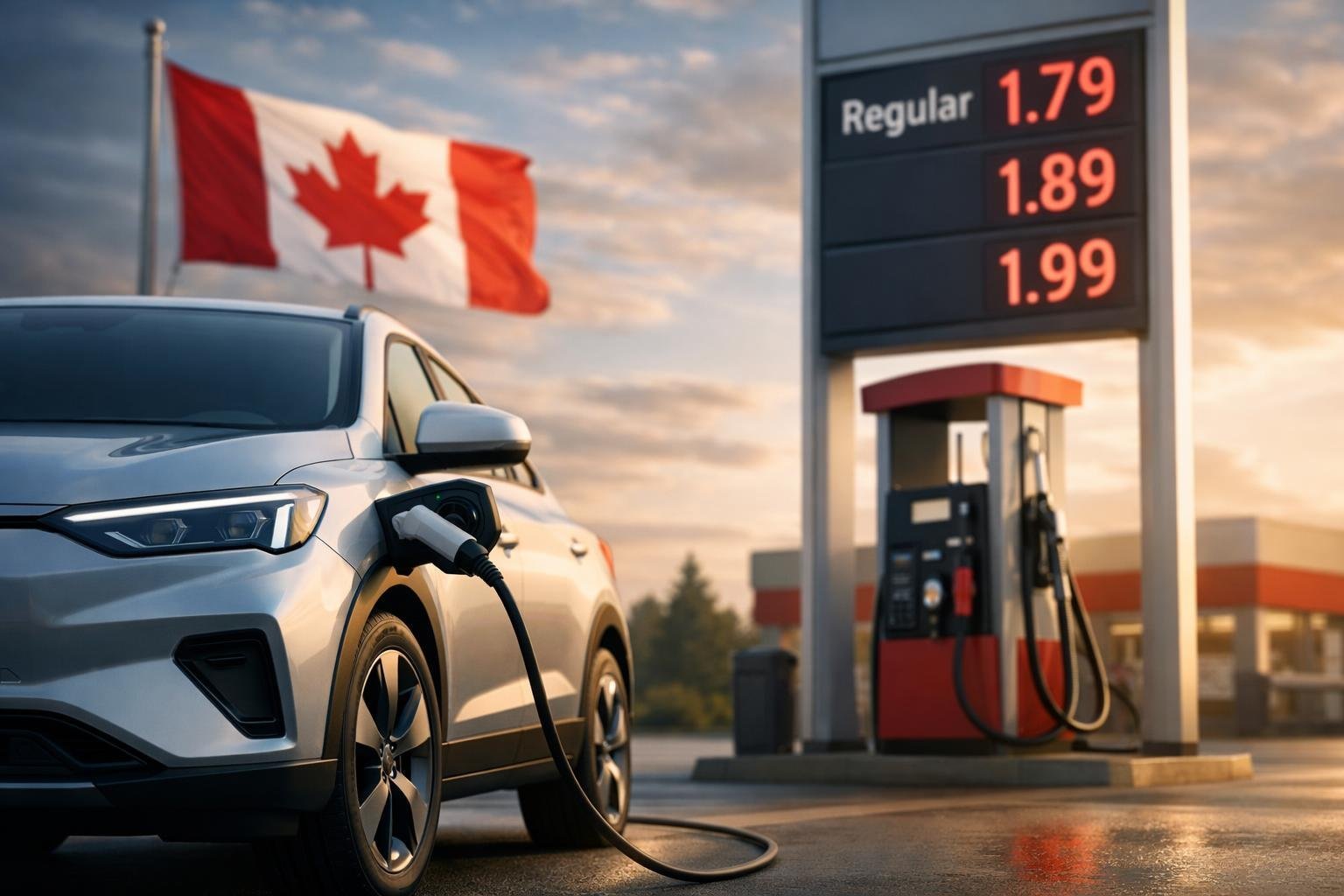
A new Canadian poll suggests affordability continues to play an important role in how drivers view electric vehicles.According to polling commissioned by Clean Energy Canada, 21% of Canadians surveyed said recent developments — specifically the return of the federal EV rebate and higher gasoline prices — have made them more inclined to consider an electric vehicle than they were previously.
The finding doesn’t mean one in five Canadians are about to buy an EV. But it does suggest that changes in the economics of owning one can influence purchase interest.
EV Interest Remains Substantial
The poll found that 52% of Canadians are open to getting an EV, regardless of whether the rebate and recent gasoline prices changed their views. When respondents were asked specifically whether they were inclined toward an EV or a gasoline vehicle for their next purchase, 45% selected an EV — the same proportion reported in Clean Energy Canada’s 2025 polling.
Interest varied considerably across demographic and regional groups. Among Canadians aged 18 to 29, 76% said they were open to an EV. The figure was 62% among British Columbians and 65% among households earning more than $100,000 annually.
What the Poll Actually Tells Us
It’s important to distinguish interest from actual vehicle sales. The survey measures consumer sentiment; it does not establish that 21% of Canadians will purchase an EV.
Still, the results provide an interesting snapshot of how financial factors can affect consideration. Vehicle purchase price, available incentives and operating costs can all form part of the calculation when Canadians compare an EV with a gasoline-powered vehicle. The survey was conducted between April 16 and April 22, 2026, with 2,000 Canadians. Respondents came from partner panels using the PureSpectrum platform, and the results were weighted using census data for age, gender and region.
Clean Energy Canada says the margin of error for a comparable probability-based random sample of the same size would be ±2.19 percentage points, 19 times out of 20.
What This Means for Canadian Car Buyers
The most useful takeaway isn’t that Canada has suddenly crossed some new EV-adoption threshold. In fact, the poll’s 45% figure for Canadians inclined toward an EV as their next vehicle was unchanged from the comparable question in 2025. Instead, the findings suggest that affordability can influence existing EV interest. For someone already considering an electric vehicle, changes to incentives or the cost of operating a gasoline vehicle can alter the financial comparison.
Buyers should still evaluate the numbers for their own situation. Purchase price, incentive eligibility, home or public charging access, insurance, expected mileage, and electricity and fuel costs can vary substantially between households and vehicles.
Speedhounds Analysis
The interesting part of this poll isn’t simply the “one in five” headline. It’s the difference between openness, purchase inclination and changes in sentiment. More than half of respondents were open to an EV, while 45% said they were inclined toward one as their next vehicle. Meanwhile, 21% said recent developments had increased their inclination.
Those figures measure different things and shouldn’t be treated interchangeably.
For the Canadian auto market, that distinction matters. Consumer interest may already exist without immediately translating into registrations. Affordability, available models, charging circumstances and individual driving needs can determine whether interest eventually becomes a purchase.
Bottom Line
The April 2026 poll provides evidence that incentives and gasoline prices can affect EV consideration among some Canadians, but it shouldn’t be interpreted as predicting that one in five Canadians will now buy an EV.
The broader picture is more nuanced: 52% of respondents were open to an EV, 45% were inclined toward one for their next vehicle, and 21% said recent developments had made them more inclined than before.