Ottawa Urges Automakers to Use North American EV Charging Ports
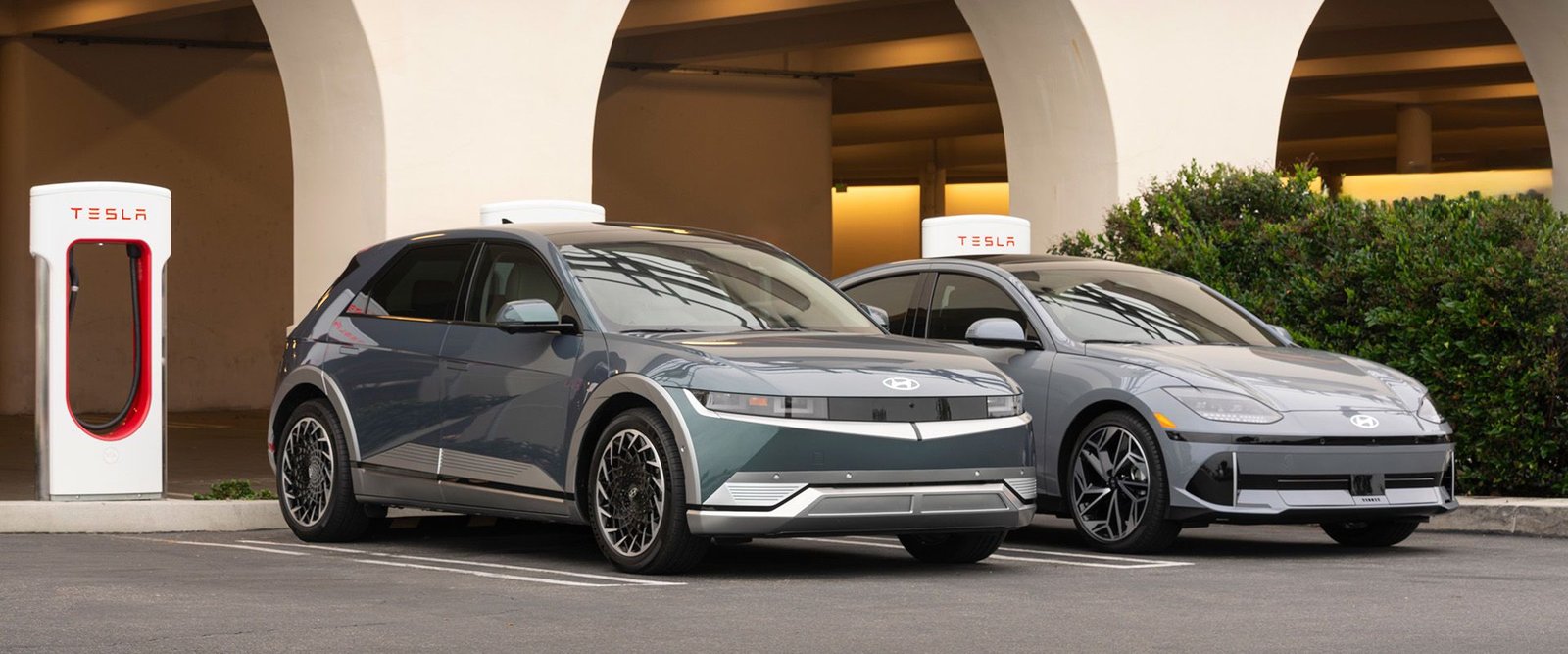
Transport Canada is asking automakers to fit electric vehicles sold in Canada with charging ports that work with North American standards, Electric Autonomy reports. The guidance is voluntary and does not change any requirement under the Motor Vehicle Safety Act or its regulations. It arrives months before Chinese automakers are expected to begin selling EVs here in larger numbers.
For buyers, the practical question is simple: will the car you buy plug into the chargers you will actually use?
What the guidance says
The document points to two connector families. NACS, standardized as SAE J3400, was developed by Tesla and now covers Level 1, Level 2 and DC fast charging. CCS1 is still the connector at a large share of Canada’s public fast chargers. CHAdeMO, a Japanese standard, is being phased out in North America, though it remains more common in British Columbia and Quebec.
Transport Canada recommends that built-in ports be compatible with North American connectors and work with existing stations. New ports should remain compatible with older standards for as long as possible. Ports should be labelled by connector type and by whether they take AC or DC power, and charging equipment should be designed for Canadian winters, where parts of the country regularly reach -40 C.
Adapters get a cautious treatment. The guidance discourages uncertified units, warning that they can cause equipment failure, electrical faults, property damage and safety risks, while acknowledging that adapters have legitimate uses. Dealers are asked to give buyers plain-language information on which chargers and equipment they can use safely.
Limits of the guidance
The guidance covers light-duty passenger vehicles only, so medium- and heavy-duty trucks are excluded. It sets no deadlines or model years for automakers to change anything. Electric Mobility Canada, whose members include automakers and charging companies, had pushed for more. Its June response to a May discussion paper urged Ottawa to discourage vehicles with foreign-standard ports, naming European CCS2 and Chinese GB/T plugs, and asked for guidance that would “strongly encourage, and in specific contexts require” North American alignment.
The scale of the network explains the concern. Canada had roughly 40,000 public chargers as of September, built mostly around North American connectors. A vehicle with a different port would depend on adapters or on a smaller set of compatible stations. Our public EV charging guide explains the charger levels and networks Canadians use today, and the federal government’s latest infrastructure money is covered in our story on the $634 million in Budget 2026 charging funding.
Where the brands stood
Automakers have been moving toward NACS for some time. A January 2025 Electric Autonomy survey of manufacturers selling in Canada found Hyundai planning NACS ports on all new or refreshed EVs from the second quarter of 2025, and Kia fitting them to the 2025 EV6 and 2026 EV9. Ford, GM, Volvo, Nissan and Polestar had announced NACS ports for future EVs, and Toyota, Lexus, Mercedes-Benz, Porsche, Genesis and Rivian had said next-generation models would follow. Audi, BMW and Mazda had no NACS-port EVs at the time. Those plans have moved on since, so check the specific model. Hyundai Canada’s product page for the 2027 IONIQ 6 N, for example, now mentions NACS charging capability.
| Automaker group | Position in January 2025 |
|---|---|
| Hyundai, Kia | NACS ports from 2025 models |
| Ford, GM, Volvo, Nissan, Polestar | NACS ports announced for future EVs |
| Toyota, Lexus, Mercedes-Benz, Porsche, Genesis, Rivian | NACS in next-generation EVs |
| Audi, BMW, Mazda | No NACS-port EVs yet |
What it means for Chinese imports
The timing is not accidental. Canada has opened a quota for China-built EVs, and a second Chinese automaker has begun importing, as we reported in our coverage of the second importer. The guidance does not name any brand, and nothing in it is binding, but it signals what Ottawa expects those vehicles to offer. Our look at Chinese EVs in Canada by 2030 explains the quota limits.
Until the rules change, the safest approach for shoppers is to ask the dealer which connector the car has, whether an adapter is included, and which networks the vehicle can use without one.