Second Chinese Automaker Begins Importing EVs to Canada
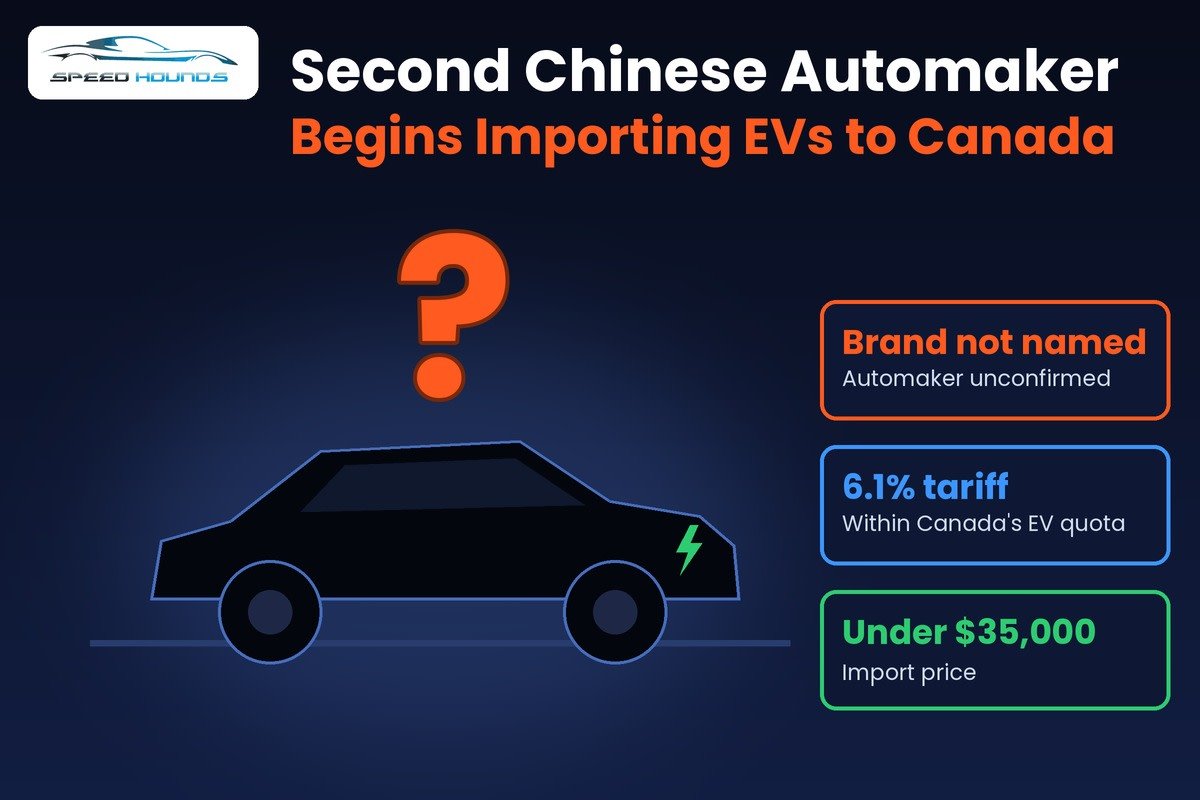
Ottawa says a second China-based automaker has met Transport Canada’s requirements and started importing vehicles into the country, according to Drive Tesla Canada. Global Affairs Canada reported the milestone in a trade update on November 16, 2026, and the company remains unnamed.
What the government has confirmed
The update says the automaker “has fulfilled all Transport Canada requirements” and has just begun importing. International Trade Minister Maninder Sidhu has said more Chinese brands are expected next year once they complete Transport Canada certification. The newly arriving vehicles are expected to arrive with an import price of less than $35,000, CP24 reports.
The first automaker to benefit has been Tesla, which builds the Model 3 it sells here in Shanghai. Sidhu acknowledged that most Chinese-made EVs entering Canada so far are Teslas, priced around $40,000.
Where the quota stands
Canada agreed in January to let 49,000 China-built EVs a year enter at the 6.1 per cent most-favoured-nation tariff, down from 100 per cent. The quota applies to vehicles built in China, not to Chinese-owned companies, so a Tesla built in Shanghai counts against it.
| Quota item | Figure |
|---|---|
| Annual quota (Year 1) | 49,000 vehicles |
| Imported since March 2026 | 16,211 |
| Spots remaining | about 32,789 |
| Tariff inside the quota | 6.1% |
| Year 1 ends | February 28, 2027 |
Ottawa expects the quota to equal about three per cent of the Canadian auto market. Tesla paused orders for its Shanghai-built Model 3 Premium in October after its quota ran out, and its website says ordering resumes if the government issues more quota, expected in March 2027.
Which brand could it be?
No brand has confirmed it. Drive Tesla Canada points to Chery, Dongfeng and Geely as candidates, noting that Chery’s Canadian launch has slipped to early 2027 and that Dongfeng’s small BOX 01 hatchback and Vigo SUV are expected to be priced below $35,000. BYD has said it plans to launch in Canada by the end of 2026.
We have covered each of these paths: Geely’s 2027 launch plans, BYD’s flash-charging plans and how Tesla leads China-built imports.
How the import system works
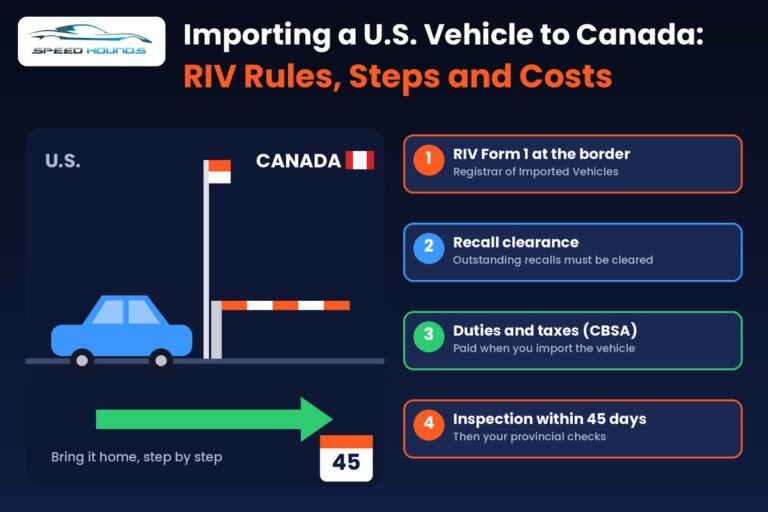
Chinese-built EVs need an import permit under Canada’s import controls, and the Canada Border Services Agency has published a customs notice on the permit requirement. Global Affairs Canada issues the quota in periods: the first ran to August 31, 2026 and the second began on September 1. Year 1 of the quota covers imports from March 1, 2026, through February 28, 2027. Because the quota follows where a vehicle is built, a brand’s ownership does not change how it is counted.
The pace has been uneven. About a third of the annual quota has been used since March, and Drive Tesla Canada reports only five imports so far in November, after none in October. A second importer adds supply, but only a fraction of the 49,000 spots has been claimed.
What it means for Canadian shoppers
If that import price carries through to the showroom, the new arrivals would sit near the cheapest EVs already on sale. The 2027 Nissan LEAF S starts at $34,998 and the Kia EV3 Light at $36,995 before freight, delivery and fees. Our comparison of the cheapest EVs in Canada has the full numbers.
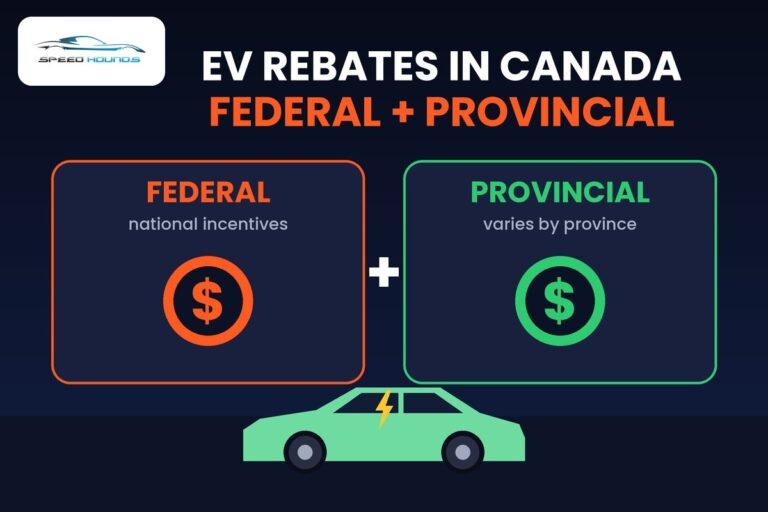
Rebates matter as much as sticker price. The federal EV Affordability Program pays up to $5,000 on eligible new battery-electric vehicles this year, the amount drops on January 1, 2027, and eligibility depends on the model and its transaction value. Check Transport Canada’s eligible vehicle list before counting on it for any Chinese-built model.
Pricing, trims and the brand’s name will matter once it appears. Until the automaker is identified, shoppers have little to compare beyond the expected import price of less than $35,000, so any listing should be checked against the eligible-vehicle list, the dealer’s warranty terms and the model’s Transport Canada compliance status.
Dealer networks, warranty coverage and winter performance are still unproven for new brands. Transport Minister Steven MacKinnon has also said the government will review limits on where Chinese EVs can drive as their numbers grow.