Nissan Patrol Turns 75: How a 1951 Off-Roader Became Canada’s Armada
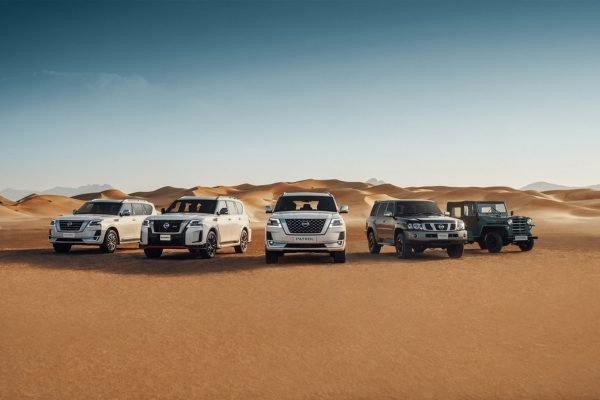
The Nissan Patrol turns 75 in 2026, and for the first time Canadian buyers will see its name on a new Armada sold here. Nissan’s decision to rename the 2027 Armada PRO-4X the Armada Patrol PRO-4X is more than an anniversary badge exercise: it reconnects the company’s biggest Canadian SUV with an off-road lineage that began decades before SUVs became mainstream family vehicles.
The important clarification is that Canada is not receiving an entirely separate Patrol model. Armada remains the vehicle name, and Patrol identifies its most trail-focused grade. The underlying relationship between the global Patrol and North American Armada is much older than the badge change.
1951: the beginning of a global off-road name
The Patrol debuted in 1951, when four-wheel-drive utility vehicles were built for demanding work rather than luxury shopping trips. Early versions prioritized rugged mechanical construction, selectable four-wheel drive and the ability to travel far beyond paved roads. That origin helps explain why the name carries more weight in markets where off-road travel is a regular part of vehicle ownership.
Nissan’s historical account points to an early ascent of Mount Fuji and a 1962 crossing of Australia’s Simpson Desert among the exploits that helped shape Patrol’s reputation. These are milestones in the nameplate’s history, not claims about the abilities of a stock 2027 Armada.
The Patrol that Americans once knew
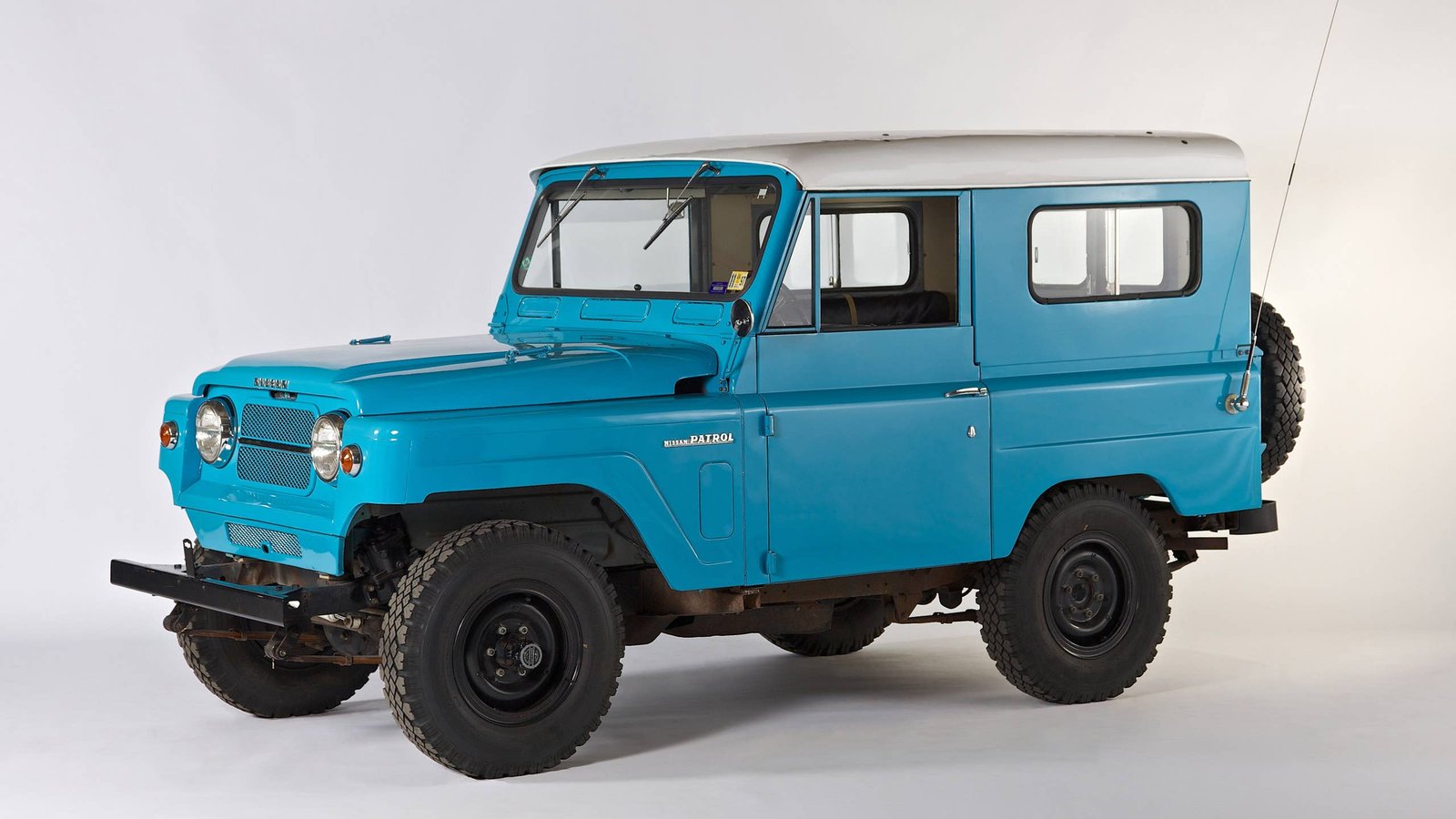
The Patrol 60 Series was offered in the United States beginning in 1962. It featured a ladder-style frame, leaf-spring suspension, a 4.0-litre inline-six engine, a three-speed manual transmission and selectable four-wheel drive. Short- and long-wheelbase versions and multiple body styles gave it versatility that later SUVs would pursue in more comfortable forms.
The 60 Series was also the first Nissan-badged vehicle sold in America, according to the manufacturer. Sales there ended after 1969, but the Patrol continued developing in other regions, particularly the Middle East, where its reputation for traversing sand dunes became part of its identity. Canadian buyers, by contrast, came to know Nissan’s large SUV under a different name.
2003: Armada becomes Nissan’s North American full-size SUV
Nissan introduced the original Armada in 2003 as a North American full-size SUV related to the Titan pickup. It used body-on-frame construction and a V8, targeting buyers who wanted three-row seating and towing capability alongside everyday comfort.
That first Armada was not simply a Patrol with a different emblem. Its North American engineering roots differed from the international Patrol, which is why the two nameplates’ histories should not be collapsed into one uninterrupted model line.
2016: Armada adopts Patrol foundations
The turning point came with the second-generation Armada introduced in 2016. Nissan moved the North American SUV to the global Patrol platform, bringing the vehicles much closer together mechanically. The company says Armada and Patrol have since become fundamentally the same vehicle, while acknowledging market-specific differences in features and equipment.
This shared architecture matters more than the 2027 lettering. The new badge makes visible a relationship that has existed for roughly a decade. A Canadian Armada and an overseas Patrol should still be compared by market specification, because identical foundations do not guarantee identical engines, electronics or trim packages.
2025: a new generation and twin-turbo power
The current-generation Armada arrived for the 2025 model year with a twin-turbocharged V6 replacing the previous V8. Nissan quotes 516 lb-ft of torque on premium fuel, emphasizing the strong low-speed pulling power expected of a large SUV. The modern vehicle also brings advanced driver-assistance systems, extensive camera coverage and available adaptive electronic air suspension.
That is a dramatic contrast with the basic early Patrol. Modern off-road capability is now a combination of mechanical traction, electronically controlled suspension, camera visibility and vehicle software. Technology can help drivers understand obstacles and manage traction, but it does not remove the physical limits imposed by vehicle weight, tire choice and ground clearance.
2027: the Patrol name arrives on a Canadian Armada
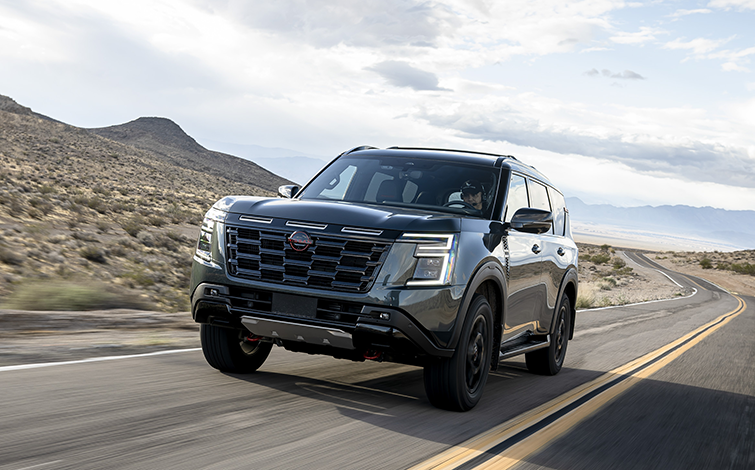
For the 2027 model year, Nissan is renaming the Armada PRO-4X the Patrol PRO-4X, starting with November 2026 production. Canadian dealership availability is expected in early 2027. Nissan lists the Patrol PRO-4X at $96,798 MSRP, separate from its $99,772 stated selling price; taxes, options and dealer pricing require their own consideration.
The grade retains an electronic locking rear differential, adaptive electronic air suspension, all-terrain tires, metal skid protection and an off-road-specific front bumper. It also offers eight selectable drive modes and the Invisible Hood View camera feature. The Patrol-branded trim combines this equipment with amenities such as heated second-row seats, heated and ventilated front seats and a panoramic moonroof.
Nissan is offering dealer-installed NISMO rock sliders and NISMO Axis wheels with BFGoodrich all-terrain tires. These accessories are not automatically part of the starting MSRP. The company also showed Patrol-themed Dune Patrol and Jungle Patrol concepts at SEMA in 2025 and 2026, respectively, but concepts should not be mistaken for Canadian production models.
What the name means for Canadian buyers
For enthusiasts, Patrol brings international heritage to a vehicle that already shares its engineering roots. For mainstream buyers, however, the badge alone changes little about how an Armada drives or what it costs to own. A three-row full-size SUV still requires consideration of fuel consumption, parking space, tire costs, towing requirements and everyday usability.
The historical story also explains why a Patrol-badged Armada can be both authentic and unfamiliar. It is authentic because the platform relationship is real; unfamiliar because Canadian showrooms have largely used the Armada identity instead. Nissan is now choosing to make that connection explicit.
A legacy worth separating from marketing
Patrol’s 75-year history includes genuinely different vehicles, markets and engineering approaches. The 1951 utility machine, the American 60 Series, the international Patrol and the current Armada are related by a long-running name and evolving engineering, not by identical capabilities.
The 2027 Patrol PRO-4X gives Canadians a visible link to that history. Whether it earns the reputation on Canadian trails will depend on its real-world performance and the needs of its owners, not the badge on the tailgate.