The Rise and Fall of Brampton Assembly: 37 Years of Cars, Then a Sale
For 37 years, a plant in Brampton, Ontario built cars: family sedans in the 1990s, then the Chrysler 300, Dodge Charger and Dodge Challenger. In November 2026 its owner, Stellantis, signed a deal to sell it to Roshel, a Brampton company that makes armoured vehicles. This account draws on The Canadian Press’s timeline of the plant, Stellantis’s own plant records and reporting on the sale up to November 22, 2026.
Last updated November 22, 2026.
Watch the full story in our video, or read the timeline below.
A plant built for a car few people remember
American Motors Corporation (AMC) opened the plant in 1986 as Bramalea Assembly. Stellantis says the site covers 269 acres, about 109 hectares, with 2.95 million square feet (roughly 274,000 square metres) of floor space. It was built for one car, the Eagle Premier sedan.
AMC did not keep it for long. Chrysler bought AMC in August 1987, and the year-old plant came with the deal. It was the first of several changes of owner: AMC, Chrysler, DaimlerChrysler, Chrysler again, Fiat Chrysler and finally Stellantis.
From family sedans to muscle cars
In June 1992 Brampton began building Chrysler’s LH sedans: the Chrysler Concorde, Dodge Intrepid and Eagle Vision. A second generation followed in September 1997, and the Chrysler LHS and 300M joined in April 1998.
The plant changed character in early 2004, when it switched to rear-wheel-drive cars. Three of the best-known American muscle cars of the past two decades were built in Ontario, not in the United States.
| Start of production | Model built at Brampton |
|---|---|
| 1986 | Eagle Premier |
| June 1992 | Chrysler Concorde, Dodge Intrepid, Eagle Vision |
| April 1998 | Chrysler LHS, Chrysler 300M |
| Early 2004 | Chrysler 300, Dodge Magnum |
| Early 2005 | Dodge Charger |
| 2008 | Dodge Challenger |
| October 2014 | Challenger SRT Hellcat |
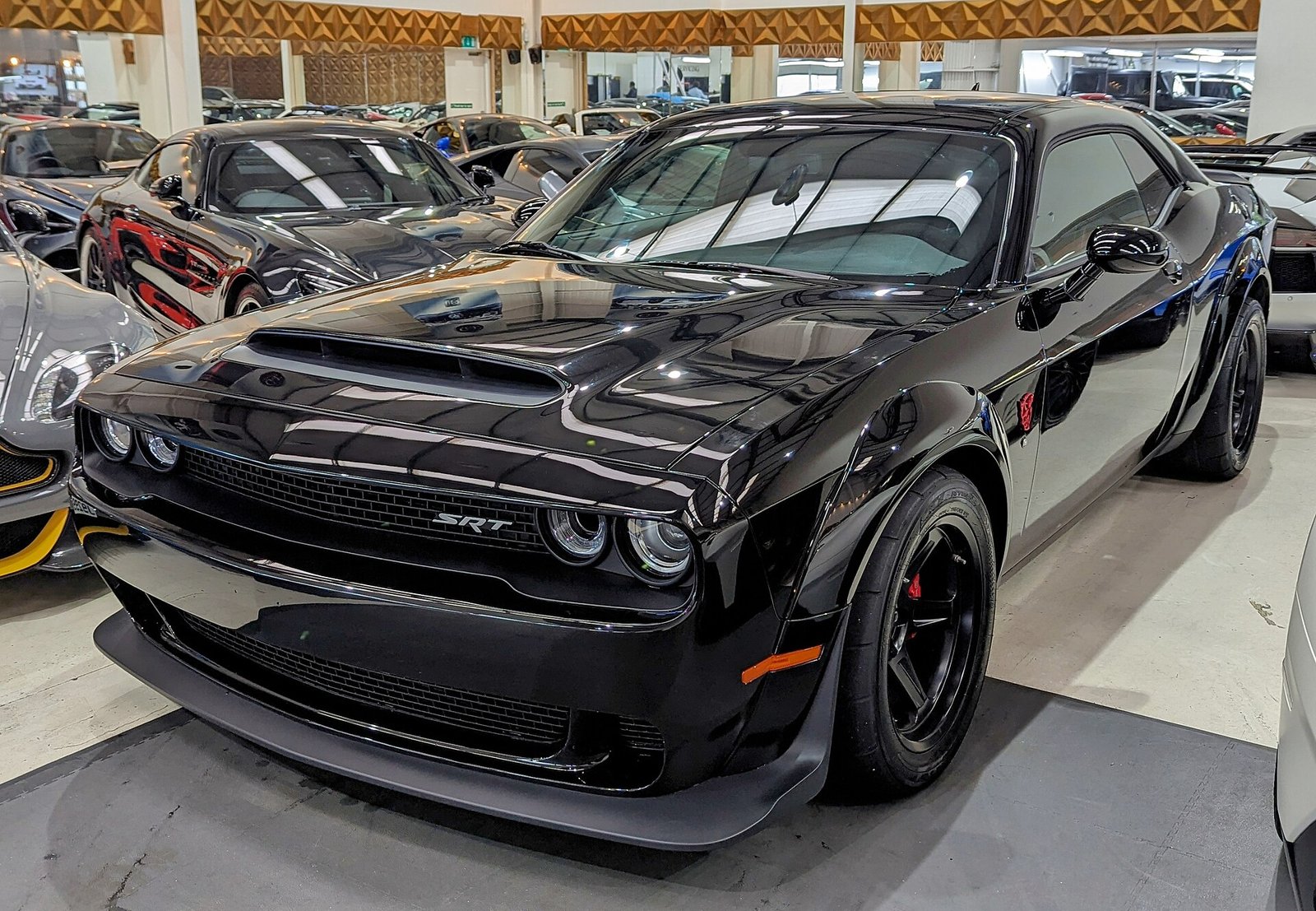
| September 2017 | Challenger SRT Demon |
It was not a smooth run. During Chrysler’s bankruptcy in 2009 the plant shut down for a time, and CBC reported that about 2,700 workers were affected.
The promise, then the tariffs
In 2022 Stellantis announced a C$3.6 billion plan to retool its Ontario plants in Windsor and Brampton, and Global News reports that Ottawa agreed to contribute up to $529 million. Brampton was to build the next-generation Jeep Compass. The last muscle cars left the line in December 2023, more than 2,200 workers were laid off for the changeover, and retooling began in January 2024.
The plan did not survive the trade dispute. After the United States brought in tariffs on Canadian goods in early 2025, Stellantis paused the work. On October 14, 2025 it said the production planned for Brampton would move to Illinois, as part of a US$13 billion plan to build more vehicles in the United States. Ottawa served the company with a notice of default in December 2025. Other automakers have gone the other way: Honda has committed new money to hybrid production in Alliston.
The sale to Roshel
In August 2026 the union Unifor said Stellantis was seriously considering closing and selling the plant. Stellantis signed a first agreement with Roshel on September 11, and on October 19 its Canadian workers voted 97.3 per cent in favour of a strike mandate. On November 9 Stellantis confirmed a deal to sell the plant and its equipment for an undisclosed price. We covered the announcement in our report on the Roshel sale and Canadian auto jobs.
Roshel says it expects to create work for about 700 to 1,000 of the laid-off Stellantis workers and plans to lease about a quarter of the site back to Stellantis. The deal is expected to close by the end of 2026 if governments and regulators approve it. Unifor president Lana Payne called it an underhanded deal. Roshel chief executive Roman Shimonov called it the best thing that can happen to the plant and the city.
Has Ottawa sued Stellantis? Not yet
Industry Minister Mélanie Joly has said more than once that Ottawa will sue. As of November 22, 2026, nothing has been filed in court. What exists is a letter dated November 12 declaring Stellantis in default of its 2022 funding agreement. It gives the company 30 days to show it will fix the breach. If it does not, Ottawa can end the agreement and demand repayment with interest, and a lawsuit would follow from there.
| Question | Where it stands on November 22, 2026 |
|---|---|
| Lawsuit filed? | No. A notice of default with a 30-day deadline |
| Federal money committed in 2022 | Up to $529 million (Windsor and Brampton) |
| What Ottawa says is owed | Hundreds of millions of dollars, according to Minister Joly |
| What Stellantis has offered to return | $24 million, the support it says it received for Brampton’s retooling |
| Cost of keeping the idle plant open | About $135 million a year (Premier Ford) |
| Sale to Roshel | Still expected to close by the end of 2026 |
Joly and Ontario Premier Doug Ford met Stellantis chief executive Antonio Filosa on November 20. Ford called the meeting challenging but productive, and no change to the sale was announced. Not everyone in Brampton wants the sale stopped: the Brampton Board of Trade has asked Ottawa to approve it while holding Stellantis to account and securing fair compensation for workers.
Where the workers stand
More than 2,200 people have been on layoff since December 2023. Stellantis points to three years of paid layoff and says it still wants a fair, negotiated resolution with Unifor. The plant was nonetheless sold before any such settlement was reached, bargaining broke down in September, and Roshel’s chief executive has said the company will not take responsibility for the laid-off workers. Unifor’s word for the sale is betrayal.
What it means for Canadian car buyers
None of the cars Brampton built is made there now, and the Jeep Compass it was promised will come from the United States. For buyers, the lesson is that where a vehicle is built can change quickly, and that trade rules now shape the Canadian market as much as engineering does. Fees, tax and financing also shape what you pay, which we break down in what a $40,000 car really costs over five years.
Featured image: Dodge Challenger SRT Demon. Photo by Calreyn88, CC BY-SA 4.0, via Wikimedia Commons.