Vehicle Safety Inspections in Canada: What Each Province Requires
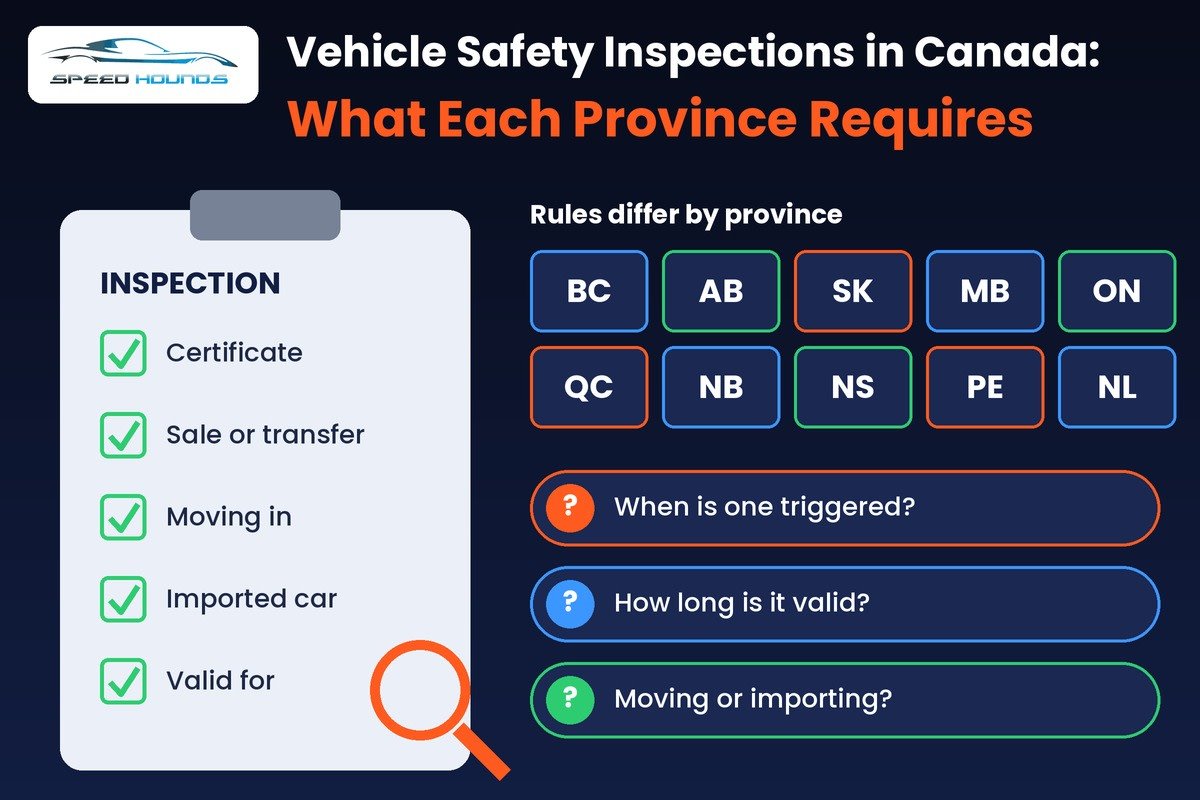
Whether your car needs a safety inspection in Canada depends almost entirely on where you live and why you are registering it. A 2024 interprovincial review by Prince Edward Island’s transportation department, the Motor Vehicle Inspection Programs: Canadian Jurisdictional Scan, found that only three provinces inspect passenger vehicles on a regular schedule. Everywhere else, inspections are triggered by an event: a sale, a move, an import or a rebuild.
Last updated November 2026
Provinces with periodic inspections
New Brunswick, Nova Scotia and Prince Edward Island are the three provinces where a vehicle must be inspected on a schedule, whether or not it changes hands. According to the review, New Brunswick inspects used vehicles every two years and first inspects a new vehicle three years from its purchase date. Nova Scotia also uses a two-year cycle, with new passenger vehicles exempt for their first three years. Prince Edward Island requires an annual inspection for all passenger vehicles.
These provinces recognize each other’s work in some cases. The review notes that New Brunswick accepts Nova Scotia and PEI inspections until they expire, and Nova Scotia does the same for New Brunswick and PEI. A vehicle moving into New Brunswick needs an inspection within 14 days of registration, and Nova Scotia requires one within 30 days of the vehicle entering the province and before registration.
Provinces that inspect when ownership changes
Ontario is the clearest example. The Ontario government says a Safety Standards Certificate is needed when you transfer a used vehicle to a new owner, register a rebuilt vehicle, change a vehicle’s status from unfit to fit, or register a vehicle bought in or brought from another province, territory or country. Plates cannot be issued without one. The certificate is valid for 36 calendar days from the inspection date, any MTO-licensed Vehicle Inspection Centre can issue it, and the price is set by each inspection station, not by the province. Transfers to a spouse are exempt, and so are used snow vehicles, off-road vehicles, motor-assisted bicycles and trailers.
The certificate is a snapshot, not a warranty. Ontario describes it as confirmation that the vehicle met minimum safety standards on the day it was inspected, so it does not replace a mechanic’s pre-purchase inspection. For that, see our guide to buying a used EV in Canada: battery, warranty and recall checks, whose recall and warranty checks apply to any used car.
Newfoundland and Labrador eliminated periodic inspections in 1994, but the review says an inspection is still required before ownership transfers, except for a gift to an immediate family member. Nova Scotia also requires an inspection before a used-vehicle transfer, with an exemption for immediate family.
Western Canada: out-of-province and imported vehicles
In British Columbia, Alberta, Saskatchewan and Manitoba there is no periodic inspection. The review says vehicles coming from other Canadian jurisdictions or from another country need a mechanical inspection, and it also lists transfer of ownership as a trigger for the four provinces. Because provincial registries describe their rules in more specific terms, confirm the exact trigger for a private sale with your registry before you buy or sell.
Alberta’s own page is explicit about vehicles from elsewhere: a vehicle registered outside the province must pass an inspection before Alberta plates are issued. The inspection is done by a licensed journeyperson technician at a licensed facility, takes about two hours on average, and each facility sets and posts its own price. If the vehicle fails, repairs must be completed within 10 days of the inspection, or a full new inspection is needed. The certificate must be presented to an Alberta registry agent within 14 days of issue, or it is not accepted.
The review also records reciprocity between the four western provinces for vehicles under four years of age, so a newer vehicle moving among British Columbia, Alberta, Saskatchewan and Manitoba may not need a fresh inspection.
Quebec and the territories
Quebec takes a different approach. The SAAQ does not inspect new vehicles at purchase, and inspections begin only for certain categories such as buses, driving school vehicles, vehicles used for paid passenger transport and heavy vehicles of 4,500 kg GVWR or more. For ordinary private cars, the SAAQ requires an occasional mechanical inspection in specific cases: used vehicles from outside Quebec, vehicles that were severely damaged and rebuilt, hand-crafted vehicles, and vehicles that were off the road or stored for more than 12 months. The review adds that a private sale within Quebec does not require an inspection, though a pre-purchase inspection is recommended.
In the territories, the review says Yukon does not require a passenger-vehicle inspection on sale except where a vehicle’s status changes to salvaged or rebuilt after a collision. The Northwest Territories uses the same collision-status trigger and may require an inspection for imports depending on the vehicle’s age. Nunavut requires no inspection for passenger vehicles.
Province-by-province summary
| Province or territory | Periodic inspection | When an inspection is triggered |
|---|---|---|
| British Columbia, Alberta, Saskatchewan, Manitoba | No | Vehicles from other jurisdictions or imported; the 2024 review also lists ownership transfer; reciprocity for vehicles under four years old |
| Ontario | No | Used-vehicle transfer (not to a spouse), rebuilt vehicles, vehicles from outside Ontario; certificate valid 36 days |
| Quebec | No (for most private cars) | Used vehicles from outside Quebec, rebuilt, hand-crafted, or off the road 12+ months |
| New Brunswick | Every two years | Within 14 days of registering a vehicle from outside the province |
| Nova Scotia | Every two years | Before transfer of a used vehicle; within 30 days for vehicles entering the province |
| Prince Edward Island | Annual | Scheduled inspection for all passenger vehicles |
| Newfoundland and Labrador | No | Before ownership transfer and for imports |
| Yukon, Northwest Territories, Nunavut | No | Salvage or rebuilt status; NWT may require it for imports; none in Nunavut |
What this means if you are moving or importing
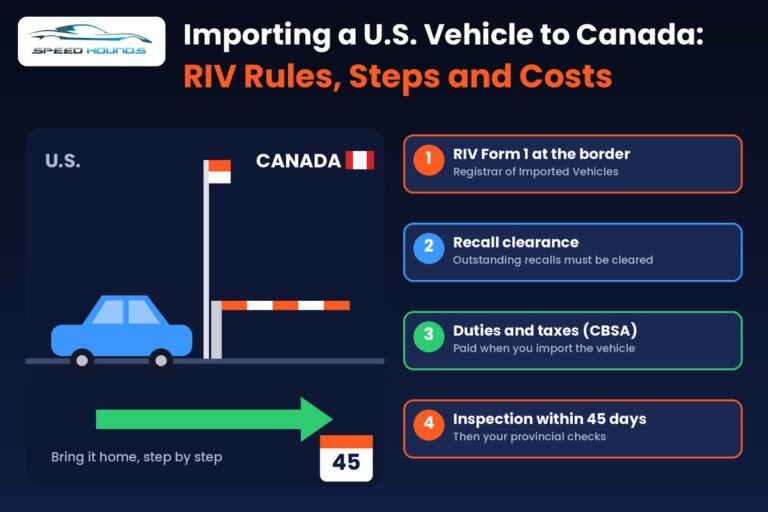
The practical rule is simple: if the vehicle comes from outside the province, plan on an inspection before you can register it. That includes a vehicle you bring from the United States, which also has to clear the federal RIV process first. Ask the registry how long the certificate stays valid, because Ontario’s 36 days and Alberta’s 14-day presentation window are short enough to lapse if you wait on repairs or a delayed appointment.
Inspection stations set their own prices in Ontario and Alberta, so compare quotes, and budget for it alongside the other costs in our guide to buying a car in Canada: taxes, fees and protection by province. A failed inspection means repairs and a re-check, and Alberta’s 10-day repair window shows how quickly a fix can turn into a second full inspection.
If you are heading into the winter driving season, an inspection is also a useful time to look at brakes, tires and lights. Our recall-check guide is a quick companion step, because an open safety recall can affect a vehicle’s resale and sometimes its import eligibility.